Insider Brief
- Researchers at Lehigh University are using machine learning to enhance the precision and safety of CRISPR gene editing, addressing unintended side effects associated with genome modifications.
- The team is developing a surrogate genome model to simulate and predict the broader impact of CRISPR edits that enable identification of novel genetic targets and avoids unintended consequences in therapeutic applications.
- Supported by an NSF grant, the project also explores nanoparticle-based delivery methods to ensure CRISPR’s efficacy while minimizing negative effects on cells.
PRESS RELEASE — CRISPR is a revolutionary tool that allows scientists to precisely modify the genome and gene expression of cells in any organism. It’s a reagent—a substance that facilitates a reaction—that combines an enzyme with a programmable RNA capable of locating specific genetic sequences. Once guided to the correct spot, the enzyme acts like a pair of scissors, cutting, replacing, or deleting sequences of DNA.
Researchers are now using the technology to, among many things, treat genetic diseases, develop medical therapeutics, and design diagnostic tools.
“CRISPR is very powerful, but it comes with side effects,” says Lehigh University bioengineering researcher Tomas Gonzalez-Fernandez, an assistant professor in the P.C. Rossin College of Engineering and Applied Science. “By modifying one gene, we can switch on or switch off many different genes that are associated with that gene, leading to unexpected results.”
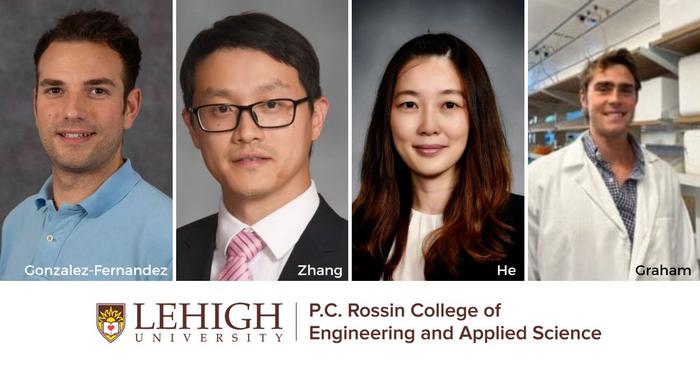
Gonzalez-Fernandez and his team recently received a grant from the National Science Foundation to address this side effect, specifically when it comes to modifying genes for desired therapeutic outcomes. Gonzalez-Fernandez has put together an interdisciplinary team with Rossin College faculty members Yu Zhang, an assistant professor of bioengineering, and Lifang He, an assistant professor of computer science and engineering, as well as Joshua Graham, a third-year PhD student in bioengineering advised by Gonzalez-Fernandez. Together, they are applying computer modeling and deep learning to predict the broader impacts of CRISPR gene edits on the genome.
“Machine learning has been used for enhancing CRISPR’s precision before, but this is the first time it’s being used to create a surrogate genome model,” says Gonzalez-Fernandez. The model will allow the team to simulate the effects of altering a single gene on the entire genome, enabling them to predict and avoid unintended consequences. It will also help in both the assessment and identification of novel genetic targets.
“So if we have a specific therapeutic application, but we don’t know what gene to modify, the model will help us identify different candidates,” he says. “It will also help us identify novel genes that no one has explored before. The genome is so huge and there are so many genes that we don’t yet understand.”
Gonzalez-Fernandez credits Graham with incorporating machine learning into the project. The PhD student, who is supported by an NSF Graduate Research Fellowship, became intrigued by the potential of applying the technology after taking a machine learning course taught by Zhang.
“Josh’s insight was pivotal,” says Gonzalez-Fernandez. “He wanted to apply the machine learning techniques he was learning in class to our CRISPR challenges, and it turned out to be exactly what we needed to make informed, predictive decisions about gene editing.”
Their approach has broad implications for various fields, including cancer treatment and musculoskeletal applications. For instance, the team has identified gene candidates that can enhance the differentiation of induced pluripotent stem cells into cells that are more effective at fighting cancer. (Induced pluripotent stem cells, or iPSCs, are capable of differentiating into any cell type in the body.) Similarly, they’ve found genes in mesenchymal stromal cells—stem cells that can differentiate into bone, cartilage, muscle, and fat cells—that can improve their differentiation into cartilage, which can enhance the treatment of conditions like osteoarthritis.
In order to function, however, CRISPR must penetrate a cell’s nucleus. And so the second part of the NSF grant focuses on the side effects of how that machinery—the enzyme and the RNA—is delivered to cells via nanoparticle-based vehicles.
“Thanks to these nanoparticles, the CRISPR machinery can enter the nucleus where it will do its magic,” he says. “But we have seen that the nanoparticle itself can negatively affect the cells. So we’ll use different computer modeling techniques to predict how these mechanisms affect the capacity of the stem cells to differentiate and survive.”
The ultimate goal, he says, is to make CRISPR safer and more reliable. By refining its use, the team hopes to expand its applications to include tissue regeneration and increasing the therapeutic capacity of stem cells.
Gonzalez-Fernandez says he enjoys the interdisciplinary nature of the effort, which brings together a variety of fields and techniques.
“How can we combine everything from computer science to modeling to genetic engineering and molecular biology to address a really significant problem of CRISPR?” he says. “It’s technically very challenging to address, but the potential is vast. This technique we’re developing could open up a range of treatment and therapeutic applications that could target a wide variety of diseases.”