
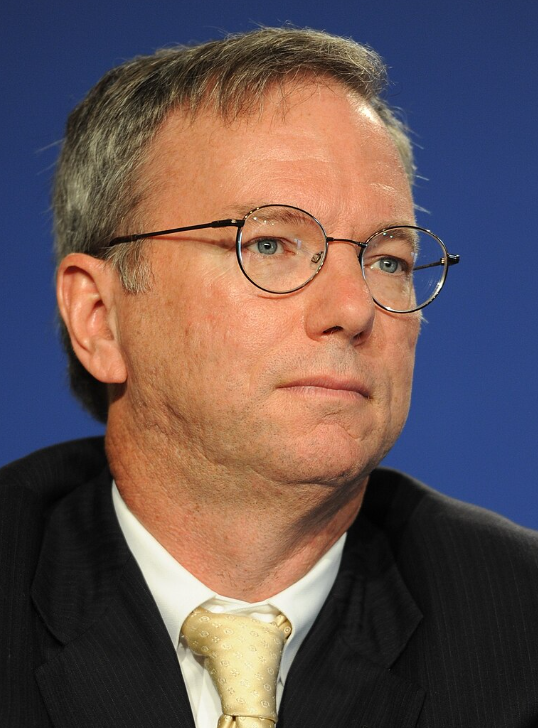
Former Google CEO Eric Schmidt has issued a stark warning about the rapidly accelerating timeline for artificial superintelligence (ASI), suggesting transformative advancements are closer than most realize.
“Because remember the computers are now doing self-improvement, they’re learning how to plan and they don’t have to listen to us anymore,” Schmidt cautioned while speaking at the AI + Biotechnology Summit, hosted by the Special Competitive Studies Project, where he presented a timeline that has shocked even industry insiders.
According to Schmidt, we’re on the verge of a cascade of AI breakthroughs. Within just one year, he predicts AI will replace “the vast majority of programmers” and match graduate-level mathematicians from top programs. Within two years, systems combining these capabilities could fundamentally reshape our digital world.
Most alarmingly, Schmidt references what he calls the “San Francisco consensus” that superintelligence — AI systems smarter than the collective intelligence of humanity — could arrive within six years.
“This is happening faster than our society, our democracy, our laws will address,” Schmidt warned. “People do not understand what happens when you have intelligence at this level which is largely free.”
Schmidt’s concerns extend beyond technological development to geopolitical implications, particularly regarding China’s AI ambitions. He noted that after DeepSeek’s breakthrough, “there is a massive program in China to accelerate these things,” creating a high-stakes international race toward superintelligence.
The race carries profound risks. Schmidt explained that as nations approach superintelligence capabilities, tensions could escalate dramatically. Countries lagging behind might resort to increasingly desperate measures, from intellectual property theft to adversarial attacks on competing AI systems.
Despite these dangers, Schmidt also acknowledges AI’s enormous potential benefits, including revolutionary advances in drug discovery, disease treatment, and solving complex scientific challenges.
Whether superintelligence arrives in six years or twenty, Schmidt’s message is clear: society remains dangerously unprepared for the scale and speed of the coming transformation. The question isn’t if AI will fundamentally change our world, but how soon — and whether we’ll be ready when it does.
Featured image: Credit: Guillaume Paumier, Wikipedia