Insider Brief
- A University of Tokyo case study found that an AI app predicting customer demand boosted productivity by 7% for less-experienced taxi drivers in Yokohama, Japan, narrowing skill gaps.
- The research suggests AI can act as a “deskilling” technology, benefiting low-skilled workers more than high-skilled ones, challenging trends that widen inequality.
- Despite its benefits, many less-skilled drivers avoided using the AI app, highlighting a reluctance to adopt new technology that could impact broader workforce adoption.
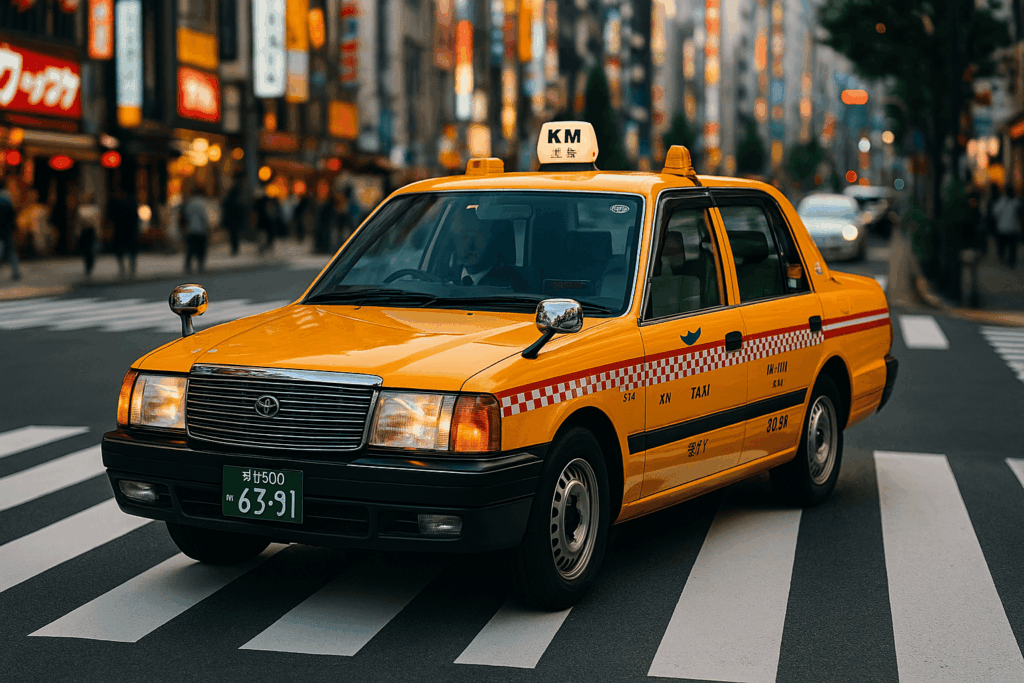
PRESS RELEASE – Artificial Intelligence (AI) impacts many industries and professions in different ways. A recent study looking at taxi drivers in Yokohama, Japan, shows that AI demand forecasting, which is unrelated to autonomous driving, can improve productivity in less-experienced drivers, helping close the skill gaps. This finding challenges the assumption that AI only favors high-skilled workers in technology-dependent industries.
The news is awash with stories about AI and the effects it can have on society — some news sites even have a dedicated tab for such stories. Though subjects vary, many stories raise the alarm about some potential negative impact or another. But researchers, including those from the University of Tokyo, have recently discovered something positive relating to the profession of taxi driving, with implications of a broader pattern at play.
Their study looked at an AI app used by taxi drivers to predict where customer demand will be highest and suggests optimal routes to them, the aim being to reduce time spent with no passengers, increasing overall efficiency. When comparing drivers with different levels of skills, and thus demand-forecasting ability, the team found that low-skilled drivers saw the biggest benefits, with a 7% productivity increase, while high-skilled drivers experienced little benefit.
“We think this demonstrates AI can act as a ‘deskilling’ technology, enhancing the productivity of low-skilled workers while diminishing the relative advantage of high-skilled counterparts,” said Professor Yasutora Watanabe from the Graduate School of Public Policy. “This shift challenges decades of technological trends that favored skilled workers, widening inequality.”
To ensure the impacts of the AI tool on taxi drivers’ efficiency was accurate, Watanabe, with Professors Daiji Kawaguchi and Hitoshi Shigeoka at the Graduate School of Public Policy and Lecturer Kyogo Kanazawa from Yokohama National University, tackled a unique challenge: They measured the impact of the AI app without interference from other factors, like unobserved local demand conditions or the location. The key was to make use of the data variation that makes the use of AI random in the analysis, similar to how medical researchers randomly assign subjects to treatment and control groups in clinical trials. Their method relied on the random nature of where taxi rides end. Drivers start looking for new customers from a location randomly determined by where the previous ride ended, thus randomly affecting the probability that drivers turn on AI depending on how familiar the location is.
“The implications of this research go beyond taxi drivers. If AI can narrow the skills gap in taxi drivers, it could do the same elsewhere,” explained Shigeoka. “These findings may apply to jobs like paralegals reviewing contracts or pathologists identifying malignant cells. AI is likely to benefit less-skilled workers more significantly, improving their performance. This has the potential to reduce inequality in professions traditionally dominated by skilled workers.”
However, the study also uncovered something puzzling: Many less-skilled drivers didn’t use the app, even though it could have significantly improved their performance. The researchers acknowledged this hesitation might stem from reluctance to embrace new technology, and that addressing this barrier could benefit workers in various sectors.
“Companies might focus on designing reskilling programs to help employees develop complementary abilities,” said Kawaguchi. “By automating skills, such as demand forecasting, employers may shift their focus to hiring workers with qualities AI cannot yet replicate like better communication skills and other people-focused things.”