Insider Brief
- Researchers at The Korea Advanced Institute of Science and Technology (KAIST), in collaboration with NAVER AI Lab, have developed a method to enhance the creative output of text-based image generation models like Stable Diffusion without requiring additional training or fine-tuning.
- The method amplifies low-frequency regions in shallow feature map blocks of the model, boosting originality while maintaining image utility, and solves issues like mode collapse in fast-generation models such as SDXL-Turbo.
- Presented at CVPR 2024, the work demonstrates measurable gains in creative diversity and practical design use cases, with support from multiple South Korean government and defense agencies.
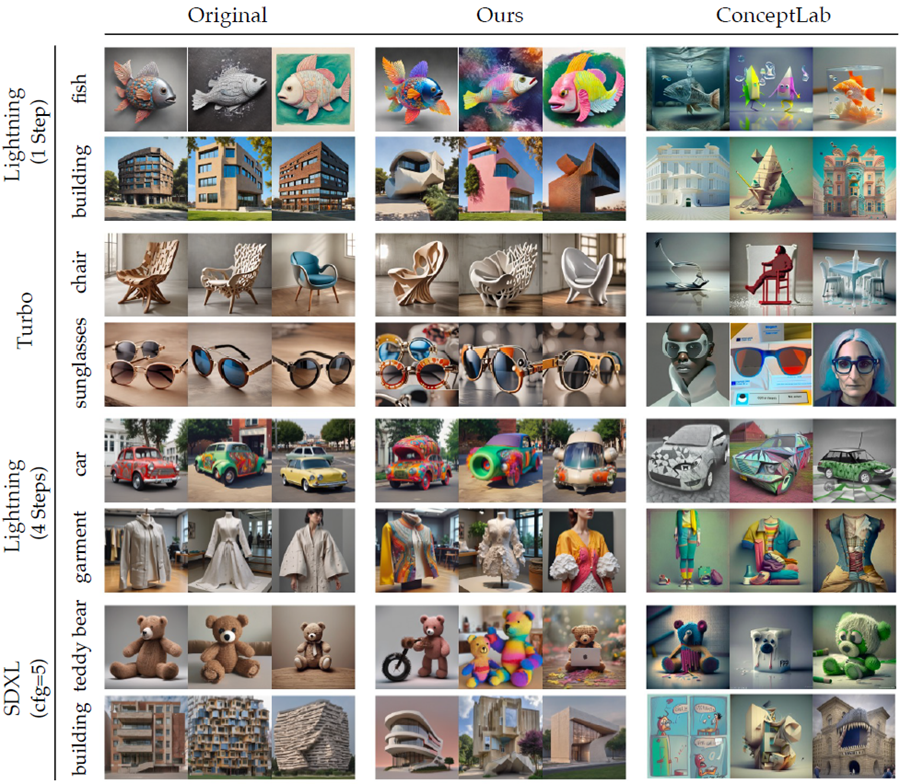
PRESS RELEASE – Recently, text-based image generation models can automatically create high-resolution, high-quality images solely from natural language descriptions. However, when a typical example like the Stable Diffusion model is given the text “creative,” its ability to generate truly creative images remains limited. KAIST researchers have developed a technology that can enhance the creativity of text-based image generation models such as Stable Diffusion without additional training, allowing AI to draw creative chair designs that are far from ordinary.
Professor Jaesik Choi’s research team at KAIST Kim Jaechul Graduate School of AI, in collaboration with NAVER AI Lab, developed this technology to enhance the creative generation of AI generative models without the need for additional training.
Professor Choi’s research team developed a technology to enhance creative generation by amplifying the internal feature maps of text-based image generation models. They also discovered that shallow blocks within the model play a crucial role in creative generation. They confirmed that amplifying values in the high-frequency region after converting feature maps to the frequency domain can lead to noise or fragmented color patterns. Accordingly, the research team demonstrated that amplifying the low-frequency region of shallow blocks can effectively enhance creative generation.
Considering originality and usefulness as two key elements defining creativity, the research team proposed an algorithm that automatically selects the optimal amplification value for each block within the generative model.

Through the developed algorithm, appropriate amplification of the internal feature maps of a pre-trained Stable Diffusion model was able to enhance creative generation without additional classification data or training.
The research team quantitatively proved, using various metrics, that their developed algorithm can generate images that are more novel than those from existing models, without significantly compromising utility.
In particular, they confirmed an increase in image diversity by mitigating the mode collapse problem that occurs in the SDXL-Turbo model, which was developed to significantly improve the image generation speed of the Stable Diffusion XL (SDXL) model. Furthermore, user studies showed that human evaluation also confirmed a significant improvement in novelty relative to utility compared to existing methods.
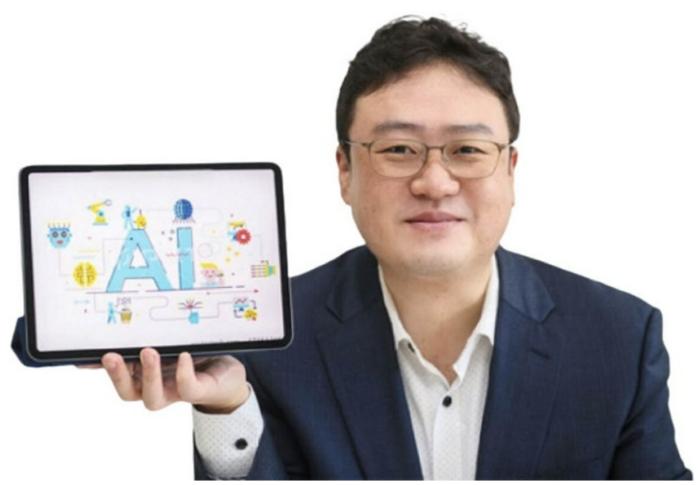
Jiyeon Han and Dahee Kwon, Ph.D. candidates at KAIST and co-first authors of the paper, stated, “This is the first methodology to enhance the creative generation of generative models without new training or fine-tuning. We have shown that the latent creativity within trained AI generative models can be enhanced through feature map manipulation.”
They added, “This research makes it easy to generate creative images using only text from existing trained models. It is expected to provide new inspiration in various fields, such as creative product design, and contribute to the practical and useful application of AI models in the creative ecosystem.”
This research, co-authored by Jiyeon Han and Dahee Kwon, Ph.D. candidates at KAIST Kim Jaechul Graduate School of AI, was presented on June 16 at the International Conference on Computer Vision and Pattern Recognition (CVPR), an international academic conference.
- Paper Title: Enhancing Creative Generation on Stable Diffusion-based Models
- DOI: https://doi.org/10.48550/arXiv.2503.23538
This research was supported by the KAIST-NAVER Ultra-creative AI Research Center, the Innovation Growth Engine Project Explainable AI, the AI Research Hub Project, and research on flexible evolving AI technology development in line with increasingly strengthened ethical policies, all funded by the Ministry of Science and ICT through the Institute for Information & Communications Technology Promotion. It also received support from the KAIST AI Graduate School Program and was carried out at the KAIST Future Defense AI Specialized Research Center with support from the Defense Acquisition Program Administration and the Agency for Defense Development.