
Insider Brief
- Lyte emerged from stealth with $107 million in aggregate funding at CES 2026, unveiling an integrated perception platform aimed at reducing the complexity of deploying autonomous robots and earning Best of Innovation recognition in robotics.
- Founded by Alexander Shpunt, Arman Hajati, and Yuval Gerson — engineers behind Microsoft Kinect and Apple Face ID — Lyte is positioning its LyteVision system as a unified sensing stack combining 4D sensing, RGB imaging, and motion awareness for robots ranging from AMRs to humanoids and robotaxis.
- Backed by investors including Avigdor Willenz, Fidelity Management & Research Company, Atreides Management, and Exor Ventures, Lyte is targeting industrial adoption as manufacturers face mounting pressure to automate amid labor shortages and rising deployment complexity.
Lyte, a Mountain View–based robotics perception startup, announced it emerged from stealth with $107 million in aggregate funding and a platform aimed at simplifying how autonomous machines see and interpret the physical world. The company disclosed the funding and product details alongside its debut at CES 2026, where its technology received Best of Innovation recognition in robotics and honors in vehicle technology and advanced mobility.
Lyte was founded by Alexander Shpunt, Arman Hajati, and Yuval Gerson, engineers best known for their work on depth-sensing systems that shaped Microsoft’s Kinect and later became part of Apple’s Face ID platform. Shpunt previously co-founded PrimeSense, which Apple acquired in 2013, and now serves as Lyte’s chief executive.
Lyte’s founding investor and board chairman is Avigdor Willenz, a veteran semiconductor entrepreneur. Other investors include Fidelity Management & Research Company, Atreides Management, Exor Ventures, Key1 Capital and Venture Tech Alliance. The company has not disclosed a valuation.
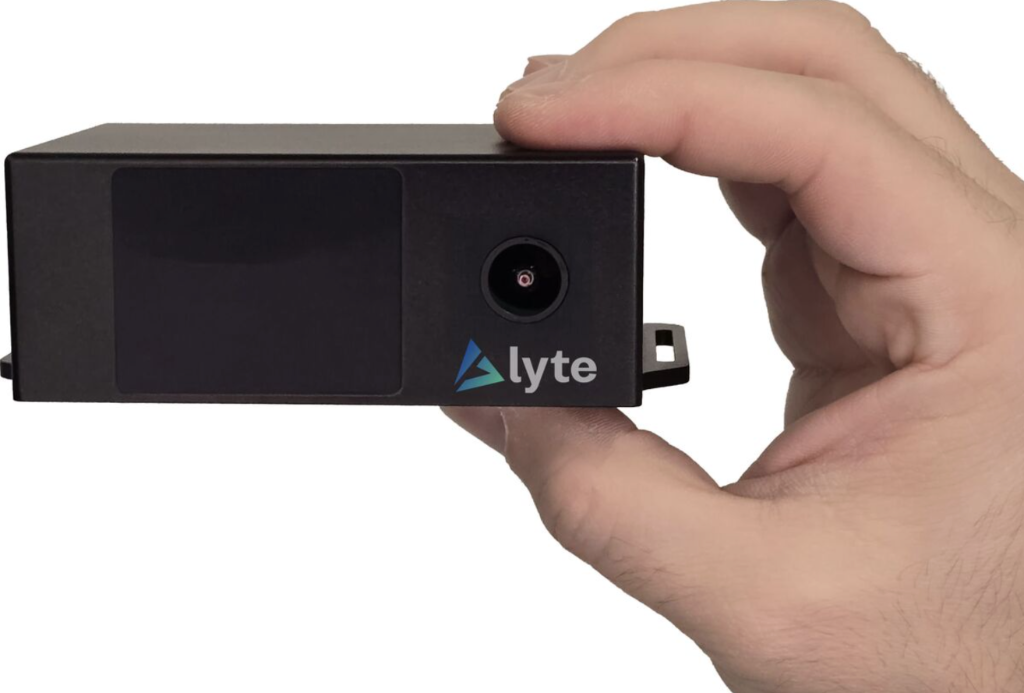
The company said it is positioning itself as a supplier of integrated perception infrastructure for robotics and what the industry increasingly calls physical AI. Its core product, LyteVision, combines 4D sensing, RGB imaging, and motion awareness into a single hardware and software platform, delivering unified spatial and visual data through one connection. According to the company, the system is designed to support a wide range of robotic form factors, including autonomous mobile robots, robotic arms, quadrupeds, humanoids and robotaxis.
“Physical AI will change how the world works, but only if robots can see it clearly,” Shpunt, CEO and Co-Founder, said in the annnouncement. “After helping shape how billions of people interact with technology, we’ve assembled an extraordinary team to build the perception layer that enables robots to operate safely and reliably at scale.”
Lyte argues that its approach addresses a structural bottleneck in robotics deployment. Many robotics teams today assemble perception stacks from multiple vendors, then spend months calibrating sensors, building fusion software, and resolving integration failures. Lyte indicated its vertically integrated design is intended to reduce that complexity by providing sensing, compute and software as a cohesive system rather than discrete components.
The platform is paired with an AI-driven operating layer that Lyte said is designed to evolve alongside advances in vision, language and action models. The company emphasizes safety, reliability and performance at the hardware level, reflecting the demands of robots operating in unstructured, real-world environments.
Estimates cited by Lyte project the AI robotics market could reach $125 billion by 2030, while consulting research suggests a majority of industrial companies still lack the internal expertise to deploy robotic automation at scale.
At CES, Lyte is showing its technology through private demonstrations rather than public booth displays. The company said its goal is to become a foundational perception supplier as robotics moves from pilot projects to broader commercial deployment.
“Lyte is building at the right layer, at the right moment,” Willenz said in a statement. “I’ve seen how foundational technologies unlock entire industries. What stands out here is the depth of the team and the discipline to solve perception as a system – where lasting value is created.”
Image credit: Lyte