
Insider Brief
- Aeva announced it has delivered initial C-sample units of its Atlas 4D lidar sensors to Daimler Truck North America and Torc Robotics as the companies move toward series production of SAE Level 4 autonomous Freightliner Cascadia semi-trucks.
- Aeva said Atlas serves as a core long-range perception sensor for autonomous highway driving, using FMCW lidar technology to simultaneously measure object distance and velocity while operating across varying weather and lighting conditions.
- The Atlas platform is designed to detect hazards up to 500 meters away, supporting highway-speed autonomous trucking programs as Daimler Truck and Torc continue integration, validation and system optimization ahead of commercial deployment.
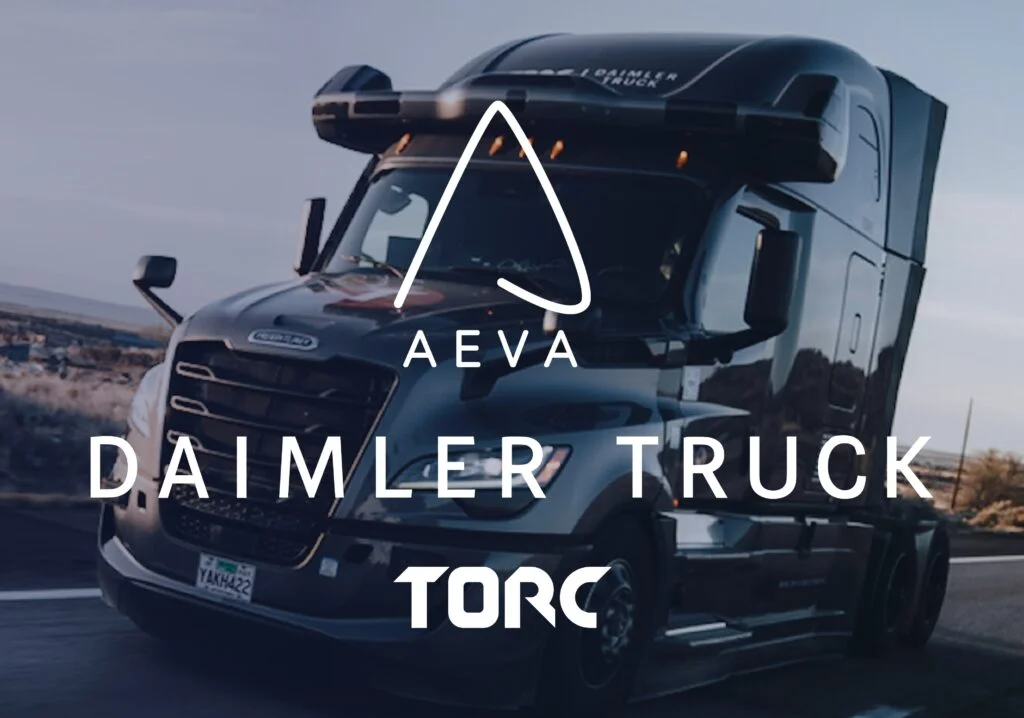
Press Release –Aeva (Nasdaq: AEVA), a leader in next-generation sensing and perception systems, announced it has delivered initial C-sample units of its Aeva Atlas™ 4D LiDAR sensors to Daimler Truck North America and Torc Robotics, marking a major milestone in the companies’ collaboration for the future series production of SAE Level 4 autonomous Class 8 semi-trucks.
The C-sample delivery represents a critical step toward the deployment of autonomous Freightliner Cascadia trucks in North America, where Aeva is the exclusive long-range LiDAR supplier. Atlas serves as a critical perception sensor in the vehicle’s autonomous driving system, enabling high-precision detection and tracking of objects at long distances required for safe highway autonomy.
“Our partnership with Aeva continues to make strong progress as we move toward series production of our autonomous truck program,” said Rakesh Aneja, Head of Corporate Development at Daimler Truck North America. “The delivery of Atlas C-samples reflects the maturity of Aeva’s technology and the strength of our collaboration as we work together to bring safe, reliable autonomous trucking solutions to market.”
With C-sample delivery underway, Aeva and Daimler Truck will continue integration, validation, and system optimization as the program advances towards series production.
“Delivering Atlas C-sample sensors to Daimler Truck marks a major step toward bringing autonomous trucking towards series production,” said Soroush Salehian, Co-founder and CEO of Aeva. “Atlas is purpose-built for the long-range perception required at highway speeds, and our unique ability to measure both distance and instant velocity enables autonomous systems to detect and respond to hazards earlier and with greater confidence. We’re proud to advance our collaboration with Daimler Truck towards launch as the industry moves closer to deploying safe autonomous trucks at scale.”
Atlas is powered by Aeva’s Frequency Modulated Continuous Wave (FMCW) technology, which simultaneously measures range and velocity for every detected point. This capability allows autonomous systems to directly detect and track objects at long distances with high confidence while maintaining strong performance across a variety of weather and lighting conditions.
The Atlas platform is designed to deliver long-range detection up to 500 meters, enabling autonomous trucks to perceive critical hazards far ahead of the vehicle and respond safely at highway speeds. The sensor’s ability to directly measure velocity also helps autonomous systems distinguish moving objects from static background elements, improving reliability in complex driving environments.
Image credit: Aeva