Insider Brief
- LTX released LTX-2.5, an open-weights world model for video generation, robotics and real-time applications that the company says improves output quality, inference speed and computing efficiency.
- The model includes a pretrained checkpoint for physical AI and robotics that developers can fine-tune on their own data, with Markov Robotics using LTX models to help robots model physical environments and generalize across different situations.
- LTX-2.5 is available for local deployment through Hugging Face and ComfyUI, with Nvidia optimizations for RTX GPUs and DGX Spark designed to reduce memory requirements.
LTX has released LTX-2.5, an open-weights world model designed for robotics as well as video generation and real-time applications. According to the company, the model improves output quality, inference speed and computing efficiency.
The model is available for download and local deployment, allowing developers to run and fine-tune it on their own hardware. LTX said its models have been downloaded more than 33 million times and are being used in areas including film production, robotics and real-time rendering.
LTX-2.5 is available through Hugging Face, the LTX API and ComfyUI, where it runs natively through a launch partnership with the node-based development platform.
Unlike large language models, which predict text, world models are designed to model how an environment changes over time. That makes them potentially useful for applications that require an understanding of motion, space and physical interactions, including robot training and simulation.
Robotics and Real-Time Applications
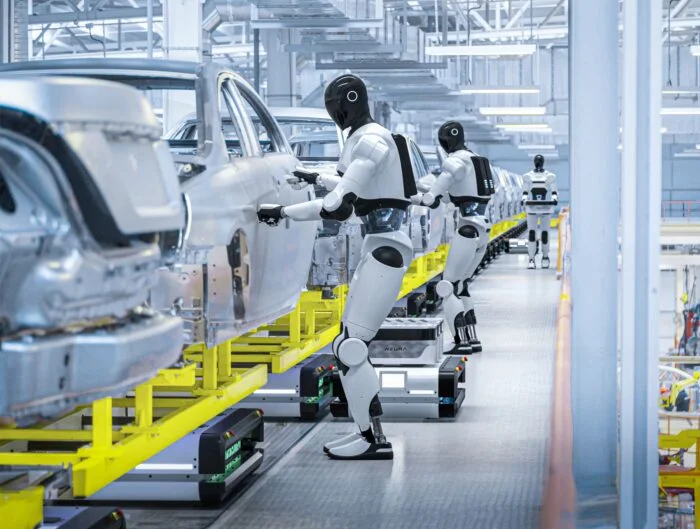
LTX is marketing the model beyond media generation, particularly in robotics and simulation.
The company pointed out that Markov Robotics is using LTX models to develop systems intended to help robots model physical environments and generalize across different situations. The open-weights approach allows the company to fine-tune the model on its own robotics data and run it on its own hardware.
“Training robots means teaching them how the physical world actually behaves, not just what it looks like,” Markov Robotics co-founder and CEO Atharva Gundawar said in the announcement. “LTX-2.5 is the open model that gets closest to that for us, and being able to run and fine-tune it on our own hardware is what makes it usable for real robotics work. We have not found another open model that does this for us the way this one does.”
LTX is also working with Reactor, which operates low-latency inference infrastructure for applications including interactive avatars, real-time generated environments and robotics workloads. In media, film studio Asteria is using LTX for video production.
What’s New in LTX-2.5
LTX said it reworked much of the model’s generation pipeline. Key capabilities include:
- Improved video decoding: A new diffusion video decoder is designed to reduce artifacts during high-motion sequences while maintaining LTX’s video compression.
- Multishot generation: The model can generate multiple shots as a single sequence while maintaining characters, scenes and voices across cuts.
- Prompt handling: A Gemma 4-based language backbone and prompt enhancer are designed to interpret more complex prompts involving multiple subjects.
- Fidelity rendering: The model generates high-detail keyframes while handling motion and structure in a compressed latent space, adjusting the number of keyframes based on scene complexity and available compute.
- Robotics adaptation: A pretrained checkpoint for physical AI and robotics provides a starting point that developers can fine-tune using their own domain-specific data.
- Faster inference: LTX said an improved distilled version of the model can approach the full model’s quality while using less compute.
- Local deployment: LTX worked with Nvidia to optimize the model for RTX GPUs and DGX Spark, reducing memory requirements for local inference.
Because the weights are available, organizations can run LTX-2.5 without sending their data to an outside model provider and can modify the model for their own applications.
Local and Open Deployment
LTX said it worked with Nvidia to reduce the amount of GPU memory required to run LTX-2.5 locally. The company said the model can run across hardware ranging from data-center GPUs to personal computers, including Macs.
The open-weights release also gives developers control over model customization and where their data is processed, an approach that could be particularly relevant for companies working with proprietary robotics, industrial or media data.
LTX-2.5 is available now and is free to use for organizations with less than $10 million in annual recurring revenue.