Insider Brief
- A nationwide Japanese study found robotic gastrectomy was associated with less blood loss, fewer conversions to open surgery and shorter hospital stays than laparoscopic surgery for gastric cancer patients.
- Researchers compared 9,743 matched pairs undergoing robotic and laparoscopic distal gastrectomy and 1,617 matched pairs undergoing total gastrectomy using Japan’s National Clinical Database.
- Robotic distal gastrectomy was also associated with fewer serious postoperative complications and intra-abdominal infections, although robotic procedures took longer and total gastrectomy did not significantly reduce major complications.
Robotic surgery was associated with less blood loss, fewer conversions to open surgery and shorter hospital stays than conventional laparoscopic procedures for gastric cancer patients in Japan, according to a large nationwide study led by Japan’s Fujita Health University.
According to the university, the study compared patients who underwent robotic or laparoscopic gastrectomy between January 2023 and December 2024 using data from Japan’s National Clinical Database. The study was led by Susumu Shibasaki of Fujita Health University–Okazaki Medical Center with researchers from Fujita Health University, the University of Tokyo, Gunma University and other institutions. The work was conducted with support from the Japanese Gastric Cancer Association with the findings published in the journal Gastric Cancer.
Researchers examined the two common procedures of distral gastrectomy and total gastrectomy. Distal gastrectomy removes the lower portion of the stomach and total gastrectomy removes the entire stomach. After adjusting for differences between patients, the researchers compared 9,743 matched pairs undergoing robotic and laparoscopic distal gastrectomy and 1,617 matched pairs undergoing the two approaches for total gastrectomy.
The Results
Robotic surgery resulted in 33% to 40% less blood loss and a 50% to 65% lower likelihood of patients having to be switched to open surgery during the procedure, according to the study. Patients undergoing robotic procedures also had shorter postoperative hospital stays.
The advantages were more pronounced for distal gastrectomy, researchers noted. Patients undergoing the robotic version had fewer serious postoperative complications and fewer intra-abdominal infections than those treated laparoscopically. Those benefits came with longer operating times as robotic distal gastrectomy took about 50 minutes longer on average, while robotic total gastrectomy required nearly 70 additional minutes.
The researchers said the absolute differences in several outcomes were small but appeared consistently across a range of measures.
Robotic total gastrectomy did not significantly reduce major postoperative complications compared with laparoscopic surgery. Researchers also noted that total gastrectomy, which is more technically demanding and is performed less frequently, provides surgeons with fewer opportunities to gain experience with the robotic procedure.
Laparoscopic gastrectomy is already widely used as a minimally invasive alternative to open surgery for gastric cancer, but surgeons operate through small openings with rigid instruments. Robotic systems are designed to provide greater movement, precision and visualization during those procedures.
Japan added robotic gastrectomy to its national health insurance coverage in 2018, followed by regulatory changes that expanded access to robotic surgery and increased the number of surgeons qualified to perform it.
The researchers said results from the latest analysis were better than those reported in an earlier nationwide study conducted before insurance coverage began. They attributed the change to improvements in robotic technology, increased surgical experience and expanded training.
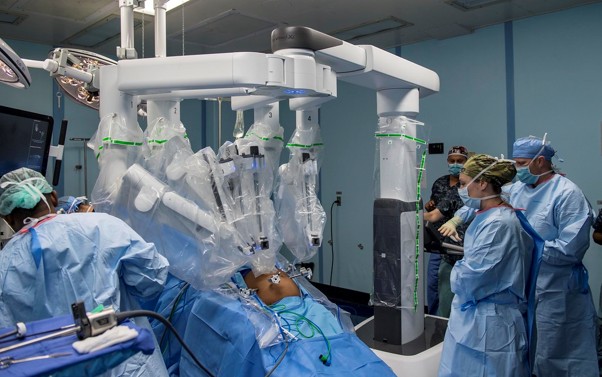
Featured Image: A comparison of patient outcomes after robotic and laparoscopic gastrectomy in Japan has found that robotic gastrectomy is associated with fewer complications, lower blood loss, lower risk of infections, and shorter hospital stay. Future advancements and better training for surgeons will produce better outcomes for patients with gastric cancer. (Image credit: Commander, U.S. 7th Fleet from Openverse)