Insider Brief
- Intrinsic released Intrinsic Core as open-source robotics software, giving developers ROS-compatible tools for building and deploying AI-enabled industrial robot applications from prototype through production.
- The release includes real-time robot control, pose estimation, motion and grasp planning, simulation, camera calibration and preconfigured ROS drivers, and is available on GitHub under an Apache 2.0 license.
- Intrinsic also introduced the Open Machine Tending Solution, an open reference design for CNC machine tending that runs on Intrinsic Core and the Open Robotics Suite and can be adapted to hardware from companies including Fanuc and Universal Robots.
Intrinsic has released core parts of its robotics software platform as open source, giving developers access to tools for building and running AI-enabled industrial robotics applications from prototype through production.
The company, which is part of Google, introduced Intrinsic Core at ROSCon 2026 in Toronto and it’s available on GitHub under an Apache 2.0 license. The software includes ROS-compatible capabilities and services that Intrinsic uses in manufacturing deployments. Intrinsic pointed out that the release is designed to reduce the amount of robotics infrastructure developers need to build themselves.
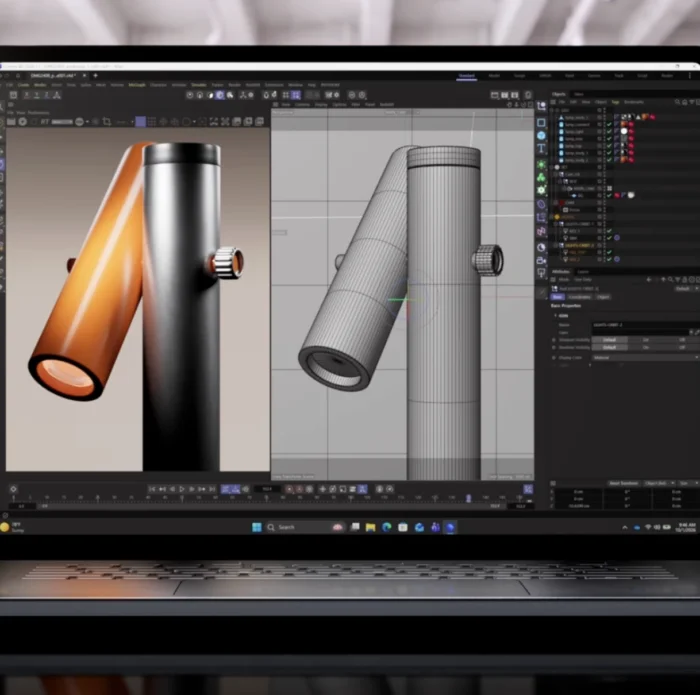
Intrinsic Core runs on local hardware and includes a hardware-independent real-time control system, asset models and a digital twin for creating virtual versions of robotic systems. Developers can use the software for research projects or private production environments. According to the company, applications built with Intrinsic Core can also work with the company’s other products, including Intrinsic Flowstate, AI models and cloud services, without requiring developers to rewrite their applications.
Intrinsic Core Key Features
The initial release includes:
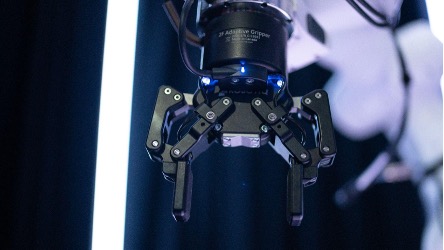
- Intrinsic Control: A real-time control framework that can adjust a robot’s movement using sensor data and supports different robot arms, grippers and sensors.
- Pose estimation: Uses Nvidia FoundationPose to determine the position and orientation of 3D parts so robots can locate and handle them.
- Motion planning: Automatically generates robot paths while avoiding collisions rather than requiring movements to be programmed joint by joint.
- Grasp planning: Uses sensor feedback to help grippers adjust to the position and orientation of objects.
- Simulation: Gazebo-based services for testing and debugging robotic applications in a virtual environment.
- Camera calibration: Automates alignment and setup of robot cameras.
- ROS drivers: Preconfigured drivers for supported robots, grippers and 3D cameras.
Intrinsic also released the Open Machine Tending Solution, or OMTS, an open reference design intended to show developers how Intrinsic Core can be applied to a production task. The system is designed for CNC machine tending, where robots load and unload equipment used to manufacture parts. OMTS can run on both Intrinsic Core and the Open Robotics Suite. Intrinsic noted it can be customized for different hardware, including equipment from Fanuc and Universal Robots, and also supports Nvidia FoundationPose.
The reference design is intended to give developers and systems integrators a starting point rather than requiring them to assemble a machine-tending application from scratch. Intrinsic said it plans additional open reference solutions for industrial automation applications.
Image credit: Intrinsic