Insider Brief
- SafeWorld emerged from stealth with $12.2 million in seed funding co-led by Shine Capital and a16z Speedrun to develop simulation software for testing the safety of autonomous robots before real-world deployment.
- The Palo Alto startup’s platform lets companies create safety scenarios from incidents, standards and robot logs, then run robots through thousands of simulated variations involving realistic human movement as software and operating conditions change.
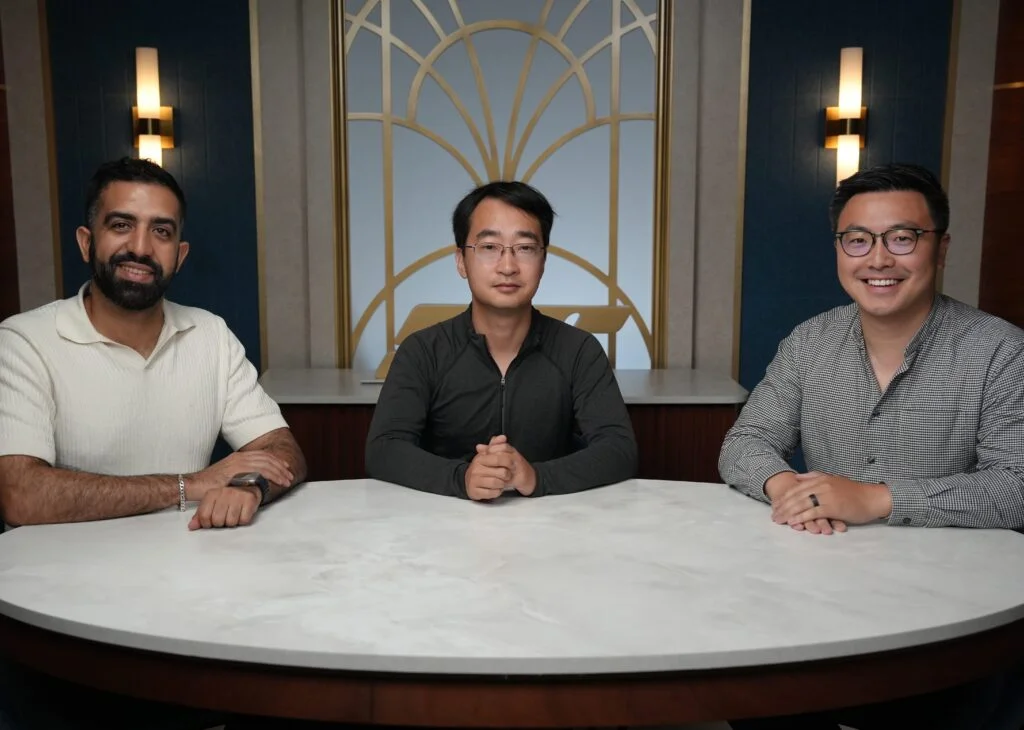
- SafeWorld, founded by Carnegie Mellon Safe AI Lab director Ding Zhao, Kyle Wong and Simo Rachidi, said it is already running early pilots with automotive manufacturers, warehouse-automation companies and medical-device makers.
SafeWorld has emerged from stealth with $12.2 million in seed funding to develop simulation software designed to help companies test the safety of increasingly autonomous robots before deploying them in the real world.
According to the startup, Shine Capital and a16z Speedrun co-led the round, with participation from Box Group, the Carnegie Mellon University Endowment, Innovation Endeavors, SV Angel and other investors.
The Palo Alto, Calif.-based SafeWorld is building a platform that lets companies test how robots behave around people in unusual, dangerous or unexpected situations without having to reproduce those conditions physically. The company noted that traditional safety testing can become costly and slow as robots gain more autonomy and operate in less predictable environments, plus physical testing makes it difficult to evaluate the large number of edge cases that may come up when robots work around people.
SafeWorld’s platform allows teams to create test scenarios in a web browser using information from previous incidents, safety standards and robot logs. The system then runs a robot through thousands of variations while simulating realistic human movement and measuring how the robot responds, according to SafeWorld. Companies can rerun those tests as robot software changes or machines are introduced into new environments, allowing safety testing to continue throughout deployment rather than being limited to a one-time certification process.
SafeWorld said it is already running early pilots with major automotive manufacturers, warehouse-automation companies and medical-device makers. Anyware Robotics is also using the company’s simulation tools to test challenging operating scenarios, according to the announcement.
The company is looking at industrial and commercial environments where robots increasingly work near people. and where existing approaches often rely on physical barriers such as cages, restricted operating areas and speed limits to reduce risk. Those measures that can also limit how closely robots can collaborate with workers.
SafeWorld was founded by Carnegie Mellon University professor Ding Zhao, former CEO of Stanford startup accelerator StartX and Pixlee founder Kyle Wong, and Simo Rachidi, who previously worked as a principal security and machine-learning engineer at Salesforce Einstein.
“For nearly two decades, I’ve worked on making autonomous systems safer,” said Zhao, who directs Carnegie Mellon’s Safe AI Lab and previously worked as a researcher at Google DeepMind. “One of the biggest lessons from autonomous vehicles is that real-world testing alone can’t cover every dangerous situation. As robots move into factories, warehouses, and other human environments, simulation gives us a way to test those situations before they happen in the real world. The same rigor the AI community is bringing to models now needs to apply to the machines those models control.”
Other investors in the seed round included Ovo Fund, Valkyrie, Zelda Ventures, Alpha Square Group, Founders Future and Brave Capital, along with founders and executives from companies including NVIDIA, Google DeepMind, Waymo, Meta, DoorDash, Dyna, Together AI and Salesforce.
“As robotics moves from impressive demos to everyday deployment, safety becomes a prerequisite for adoption.” added Wong, who along with being a co-founder serves as CEO. “We believe more modern ways to test and validate safety can help unlock the broader potential of robotics.”