Insider Brief
- NVIDIA has announced new GeForce RTX™ SUPER desktop GPUs, AI laptops from top manufacturers, and RTX™-accelerated AI software and tools at CES 2024.
- These advancements aim to boost generative AI performance, with a focus on text-to-image workflows, AI texture tools, and DLSS 3 technology for gaming.
- The company introduced AI Workbench, a toolkit for AI developers, and the NVIDIA TensorRT-LLM library, which optimizes inference performance of large language models (LLMs).
PRESS RELEASE — CES/January 8, 2024 — NVIDIA today announced GeForce RTX™ SUPER desktop GPUs for supercharged generative AI performance, new AI laptops from every top manufacturer, and new NVIDIA RTX™-accelerated AI software and tools for both developers and consumers.
Building on decades of PC leadership, with over 100 million of its RTX GPUs driving the AI PC era, NVIDIA is now offering these tools to enhance PC experiences with generative AI: NVIDIA TensorRT™ acceleration of the popular Stable Diffusion XL model for text-to-image workflows, NVIDIA RTX Remix with generative AI texture tools, NVIDIA ACE microservices and more games that use DLSS 3 technology with Frame Generation.
AI Workbench, a unified, easy-to-use toolkit for AI developers, will be available in beta later this month. In addition, NVIDIA TensorRT-LLM (TRT-LLM), an open-source library that accelerates and optimizes inference performance of the latest large language models (LLMs), now supports more pre-optimized models for PCs. Accelerated by TRT-LLM, Chat with RTX, an NVIDIA tech demo also releasing this month, allows AI enthusiasts to interact with their notes, documents and other content.
“Generative AI is the single most significant platform transition in computing history and will transform every industry, including gaming,” said Jensen Huang, founder and CEO of NVIDIA. “With over 100 million RTX AI PCs and workstations, NVIDIA is a massive installed base for developers and gamers to enjoy the magic of generative AI.”
Running generative AI locally on a PC is critical for privacy, latency and cost-sensitive applications. It requires a large installed base of AI-ready systems, as well as the right developer tools to tune and optimize AI models for the PC platform.
To meet these needs, NVIDIA is delivering innovations across its full technology stack, driving new experiences and building on the 500+ AI-enabled PC applications and games already accelerated by NVIDIA RTX technology.
RTX AI PCs and Workstations
NVIDIA RTX GPUs — capable of running a broad range of applications at the highest performance — unlock the full potential of generative AI on PCs. Tensor Cores in these GPUs dramatically speed AI performance across the most demanding applications for work and play.
The new GeForce RTX 40 SUPER Series graphics cards, also announced today at CES, include the GeForce RTX 4080 SUPER, 4070 Ti SUPER and 4070 SUPER for top AI performance. The GeForce RTX 4080 SUPER generates AI video 1.5x faster — and images 1.7x faster — than the GeForce RTX 3080 Ti GPU. The Tensor Cores in SUPER GPUs deliver up to 836 trillion operations per second, bringing transformative AI capabilities to gaming, creating and everyday productivity.
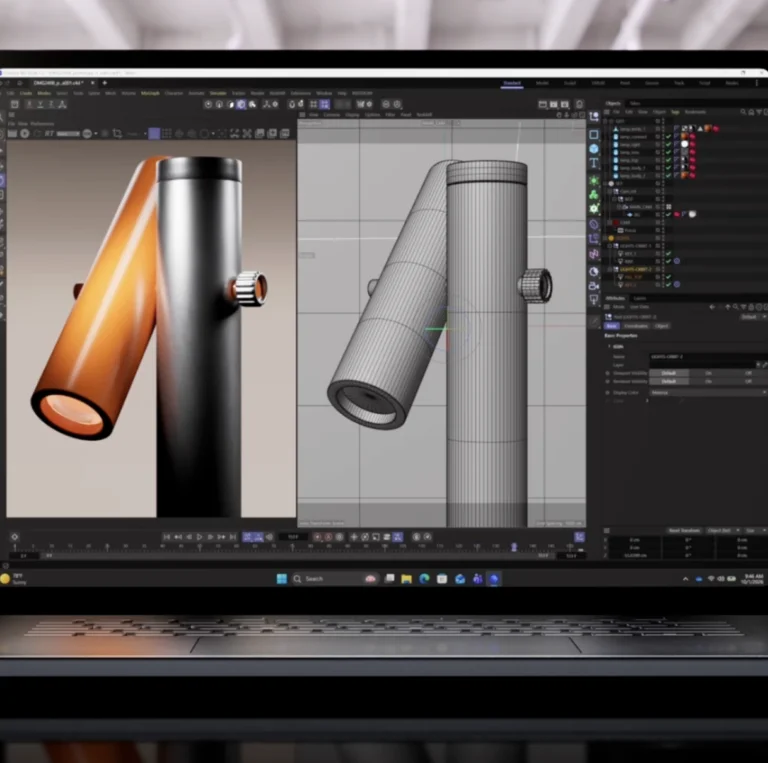
Leading manufacturers — including Acer, ASUS, Dell, HP, Lenovo, MSI, Razer and Samsung — are releasing a new wave of RTX AI laptops, bringing a full set of generative AI capabilities to users right out of the box. The new systems, which deliver a performance increase ranging from 20x-60x compared with using neural processing units, will start shipping this month.
Mobile workstations with RTX GPUs can run NVIDIA AI Enterprise software, including TensorRT and NVIDIA RAPIDS™ for simplified, secure generative AI and data science development. A three-year license for NVIDIA AI Enterprise is included with every NVIDIA A800 40GB Active GPU, providing an ideal workstation development platform for AI and data science.
New PC Developer Tools for Building AI Models
To help developers quickly create, test and customize pretrained generative AI models and LLMs using PC-class performance and memory footprint, NVIDIA recently announced NVIDIA AI Workbench.
AI Workbench, which will be available in beta later this month, offers streamlined access to popular repositories like Hugging Face, GitHub and NVIDIA NGC™, along with a simplified user interface that enables developers to easily reproduce, collaborate on and migrate projects.
Projects can be scaled out to virtually anywhere — whether the data center, a public cloud or NVIDIA DGX™ Cloud — and then brought back to local RTX systems on a PC or workstation for inference and light customization.
In collaboration with HP, NVIDIA is also simplifying AI model development by integrating NVIDIA AI Foundation Models and Endpoints, which include RTX-accelerated AI models and software development kits, into the HP AI Studio, a centralized platform for data science. This will allow users to easily search, import and deploy optimized models across PCs and the cloud.
After building AI models for PC use cases, developers can optimize them using NVIDIA TensorRT to take full advantage of RTX GPUs’ Tensor Cores.
NVIDIA recently extended TensorRT to text-based applications with TensorRT-LLM for Windows, an open-source library for accelerating LLMs. The latest update to TensorRT-LLM, available now, adds Phi-2 to the growing list of pre-optimized models for PC, which run up to 5x faster compared to other inference backends.
RTX-Accelerated Generative AI Powers New PC Experiences
At CES, NVIDIA and its developer partners are releasing new generative AI-powered applications and services for PCs, including:
- NVIDIA RTX Remix, a platform for creating stunning RTX remasters of classic games. Releasing in beta later this month, it delivers generative AI tools that can transform basic textures from classic games into modern, 4K-resolution, physically based rendering materials.
- NVIDIA ACE microservices, including generative AI-powered speech and animation models, which enable developers to add intelligent, dynamic digital avatars to games.
- TensorRT acceleration for Stable Diffusion XL (SDXL) Turbo and latent consistency models, two of the most popular Stable Diffusion acceleration methods. TensorRT improves performance for both by up to 60% compared with the previous fastest implementation. An updated version of the Stable Diffusion WebUI TensorRT extension is also now available, including acceleration for SDXL, SDXL Turbo, LCM — Low-Rank Adaptation (LoRA) and improved LoRA support.
- NVIDIA DLSS 3 with Frame Generation, which uses AI to increase frame rates up to 4x compared with native rendering, will be featured in a dozen of the 14 new RTX games announced, including Horizon Forbidden West, Pax Dei and Dragon’s Dogma 2.
- Chat with RTX, an NVIDIA tech demo available later this month, allows AI enthusiasts to easily connect PC LLMs to their own data using a popular technique known as retrieval-augmented generation (RAG). The demo, accelerated by TensorRT-LLM, enables users to quickly interact with their notes, documents and other content. It will also be available as an open-source reference project, so developers can easily implement the same capabilities in their own applications.
Learn more about the latest generative AI breakthroughs by joining NVIDIA at CES.