Insider Brief
- Magnendo Corp. has been selected for an award of up to $32 million from ARPA-H to develop magnetic robotic navigation technology for increasingly autonomous treatment of ischemic strokes.
- The five-year award is part of ARPA-H’s Autonomous Interventions and Robotics program and will support development of a platform for navigating guidewires and catheters through complex vascular anatomy during endovascular procedures.
- Magnendo said preclinical testing showed faster navigation and more consistent performance across physicians with different experience levels, and it plans to integrate robotics, medical imaging and AI into a single autonomous intervention platform.
Magnendo Corp. has been selected for an award of up to $32 million from the federal Advanced Research Projects Agency for Health to develop magnetic robotic navigation technology aimed at enabling more autonomous treatment of ischemic strokes.
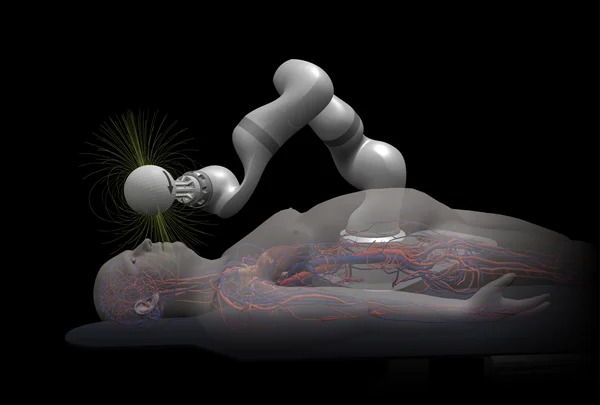
The five-year award is part of ARPA-H’s Autonomous Interventions and Robotics, or AIR, program, according to the MIT spinout. Magnendo said the funding will support development of its next-generation platform for navigating guidewires and catheters through blood vessels during endovascular procedures.
The company is targeting mechanical thrombectomy, a procedure used to remove blood clots that block major blood vessels in the brain. Access to the treatment can be limited because it requires physicians with specialized training and is available at relatively few hospitals, Magnendo ponted out. Also, navigating catheters and guidewires through blood vessels can also be difficult due to the complexity vascular anatomy. Magnendo said those conditions can increase the time required to reach a clot, delaying treatment in procedures where speed is important.
“Hundreds of thousands of people who suffer large vessel occlusions each year do not get thrombectomies, the standard of care for this type of strokes,” noted ARPA-H Program Manager Ileana Hancu, Ph.D, who leads AIR. “While these patients now live too far from a hospital that can provide care, AIR will bring care to the nearest hospital, saving patient years of disability and the healthcare system billions of dollars”
Magnendo’s technology uses magnetic robotic navigation to guide instruments through the vascular system and the company reported that preclinical testing has shown improvements in navigation speed and more consistent performance among physicians with different levels of experience.
Under the federal program, Magnendo plans to build on those results by developing technologies needed for increasingly autonomous navigation. The company will work with academic, clinical and industry partners to combine robotics with medical imaging, artificial intelligence and other technologies in a single platform.
“The AIR program provides a unique opportunity to bring together world-class expertise from leading academic institutions, medical centers, and industry around a shared vision,” said Miki Rosenberg, co-founder, chief development officer, and project director of the AIR program at Magnendo. “Developing an autonomous robotic system requires seamless integration of technologies that have traditionally evolved independently. Our focus is on integrating these complementary technologies into a robust, clinically relevant platform that brings autonomous endovascular intervention closer to clinical practice.”
Image credit: Magnendo