
Insider Brief
- Unitree Technology warned that new U.S. restrictions on foreign-made advanced robots could limit access to a major market and constrain overseas growth as it prepares for a Shanghai IPO, Reuters reported.
- Unitree said existing U.S.-authorized models can remain on sale, but future robots could be blocked and additional tariffs or withdrawn approvals could affect a market that has accounted for as much as 19.54% of revenue.
- Xinhua reported Unitree shipped more than 5,500 humanoids in 2025 and expects first-half 2026 revenue growth of up to 45.4%, while a Mercator Institute report found China leads robot manufacturing but remains dependent on Nvidia technology and behind Western rivals in general-purpose robotics models.
Chinese robotics company Unitree Technology warned that new U.S. restrictions on foreign-made advanced robots could limit its overseas growth and block future products from one of its largest markets as it prepares for a Shanghai listing, Reuters reported.
The Hangzhou-based maker of humanoid and four-legged robots disclosed the risk in documents for its planned initial public offering on Shanghai’s STAR Market, according to Reuters. Unitree is expected to begin the offering process in August.
Unitree indicated its existing humanoid and quadruped robots have already received FCC authorization and can remain on the U.S. market. Future models, however, could be excluded under the new policy.
The warning follows the FCC’s decision to add foreign-produced advanced robots to its Covered List. The action restricts new models made outside the U.S. from obtaining the equipment authorization needed to be imported, marketed or sold in the country unless they receive an exemption or conditional approval.
The company also cautioned that further U.S. action could affect products already being sold. A withdrawal of existing approvals or the addition of tariffs and other restrictions could disrupt current revenue and make it more difficult for Unitree to expand internationally, Reuters reported.
That risk is significant because overseas customers account for a large share of Unitree’s business. International revenue represented more than 40% of total sales during each of the three reporting periods included in its filing.
The U.S. alone accounted for 18.39%, 19.54% and 13.30% of revenue during those periods, respectively. The figures show that Unitree has reduced its relative exposure to the American market, but U.S. sales remain an important part of its business.
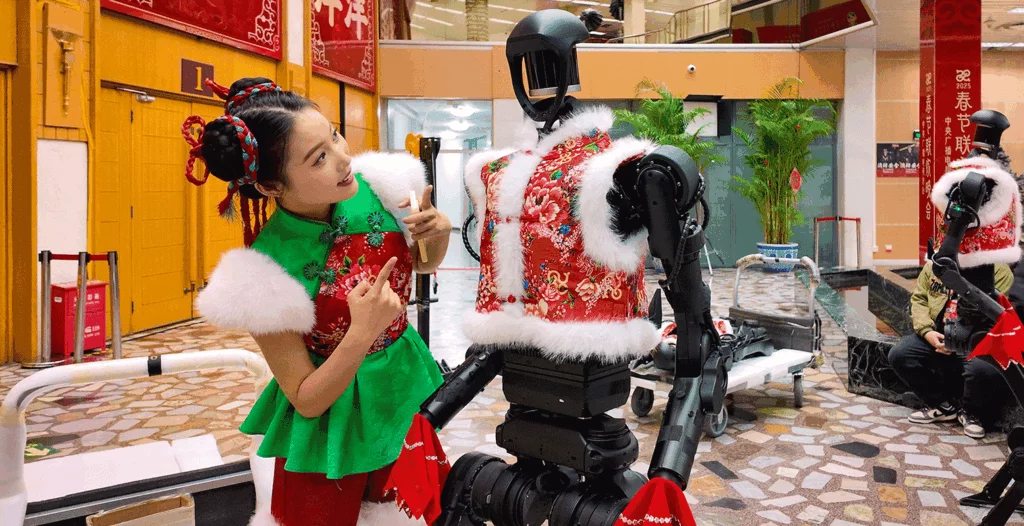
Unitree has become one of China’s most visible robotics companies through demonstrations of its machines running, dancing and performing martial arts. It sells quadruped robots for research, inspection and other uses while developing humanoids for a broader range of physical tasks.
The FCC restrictions introduce uncertainty as Unitree seeks public capital to fund its next phase of growth.
According to China’s state-owned media, Unitree’s humanoid robot shipments surpassed 5,500 units in 2025, ranking first globally. Unitree expects revenue for the first half of 2026 to rise between 35.6% and 45.4% from a year earlier, reaching as much as 1.13 billion yuan, according Xinhua. The company shipped more than 5,500 humanoid robots in 2025, which Xinhua described as the highest total globally, while its IPO received regulatory approval 104 days after its March application.
China-made quadruped robots accounted for nearly 70% of global sales during the first half of 2026, according to government data cited by Xinhua.
A Mercator Institute for China Studies report earlier this year found China produced about 90% of the world’s humanoid robots last year and controls much of the robotics supply chain, supported by its electric-vehicle industry. The report also noted that Chinese robotics companies remain dependent on Nvidia’s AI infrastructure and lag Western rivals in general-purpose robotics models, creating a strategic software vulnerability.
Unitree is not alone in facing an IPO amid the new U.S. restrictions are Chinese robotics companies as Leju Robot and Deep Robotics had their listing applications accepted in May.
Image credit: Unitree