

Insider Brief
- Ropedia, a Singapore-based startup building data infrastructure for physical AI, has raised $30 million total in pre-A funding across two rounds ($8 million in March and $22 million in the latest round) from angel investors with expertise in AI, robotics, and enterprise technology
- The company’s wearable device, HOMIE, captures synchronized first-person video, audio, depth, hand tracking, gaze, body motion, and camera pose to generate real-world multimodal data rather than labeling existing data, powering Xperience-10M, a dataset of 10 million interaction episodes and more than 10,000 hours of recordings
- Ropedia says its approach cuts data-collection costs by up to 50 times compared to traditional methods and has served more than a dozen North American embodied AI and spatial intelligence companies; funding will expand data collection across Southeast Asia and North America, scale HOMIE hardware deployment, and support new US engineering hires
PRESS RELEASE — Ropedia, a Singapore-based startup building data infrastructure for physical AI, has announced it has raised US$30 million dollars in pre-A funding from venture investors with deep experience in AI, enterprise technology and infrastructure across Southeast Asia. Other funding participants include long-term financial investors and strategic partners working in fields such as robotics, mobility and enterprise deployment. Funding will scale Ropedia’s collection of real-world, multimodal interaction data and expand delivery to technology companies developing robots and embodied AI systems.
“A robot can’t play baseball by watching a video any more than you could learn to ride a bike by reading about it. The robot must understand what it’s like to grip a bat and know the timing it takes to hit a ball. That’s the information Ropedia’s technology provides, and it’s why this investment matters. Text scraped from the internet was used to train the last generation of AI. Real-world human experience, captured at the same scale, will train physical AI. Physical AI will let us leave the lab and go to work, first in factories, then at home, helping our families,” said Zhaoxi Chen, chief executive and co-founder of Ropedia.
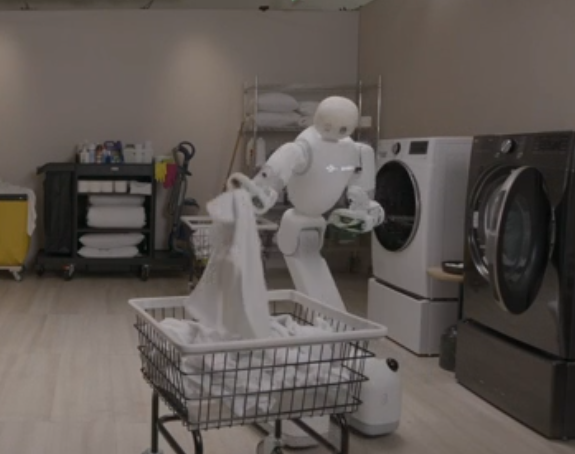
From real-world sensing to model-ready intelligence, physical AI requires an end-to-end data pipeline. Ropedia integrates hardware, data processing and data delivery into one scalable ecosystem. HOMIE, Ropedia’s wearable, head-mounted device, captures first-person video, audio, depth, hand tracking, gaze, body motion and camera pose simultaneously, with each stream timestamped. This precise alignment matters because physical AI depends on correlating perceptions and actions in real time, a capability most current data collection methods can’t provide. HOMIE feeds this synchronized data into Ropedia’s processing and annotation systems.
Ropedia is a data infrastructure company, not a data-labeling service. Standard labeling providers annotate data that already exists; Ropedia generates the data itself, then synchronizes, structures and continually refines it end-to-end. This holistic approach also sets HOMIE apart from teleoperation-based data collection, which relies on physical robot hardware and is typically limited to specific robot types.
The company operates a “closed-loop pipeline” that integrates multimodal synchronization and rigorous quality assurance into dataset generation and model-aligned fine-tuning. It sells that pipeline in three ways: dataset licensing, selective access to HOMIE hardware and research collaboration. HOMIE can be deployed anywhere and worn by anyone, giving Ropedia a scalable way to collect synchronized, multimodal data in parallel across many environments and users. Unlike teleoperation-based systems, which are constrained by expensive robot fleets, the platform scales simply by adding wearable capture devices.
This infrastructure powers Xperience-10M, one of the largest human-experience datasets in the industry: 10 million interaction episodes and more than 10,000 hours of multimodal recordings, spanning billions of synchronized video, depth, motion-capture and inertial-sensor frames. Each new HOMIE deployment also expands the range of environments, behaviors and interactions the dataset captures, making it more valuable as the network grows.
Ropedia’s approach cuts data-collection costs by up to 50 times compared with traditional methods, and HOMIE has entered mass production. Ropedia has served more than a dozen North American companies in the fields of embodied AI and spatial intelligence.
Pre-A fundraising was in two rounds and backed by individual angel investors. The latest round, announced today, raised US$22 million and follows an earlier US$8 million round announced on social media on March 16, for a total of US$30 million. Ropedia will direct the funding toward three priorities: expanding data collection across Southeast Asia and North America, scaling hardware deployment to support larger fleets of HOMIE devices, and advancing its AI research and data platform work, including new engineering hires in the U.S.
One of its angel investors, a research scientist from Amazon, said, “I backed the Ropedia team early because they had a rare combination of deep technical expertise, speed of execution and a clear vision for where physical AI was heading. Since then, they have built a compelling data infrastructure platform serving leading robotics and foundation-model companies globally. I believe Ropedia is well positioned to become a foundational company in the physical AI ecosystem.”
Robotics and physical AI lab customers get more data, delivered faster, across a wider range of environments and tasks. Ropedia serves as a data infrastructure layer for physical AI, comparable to the data centers that underpinned cloud computing or the internet text used to train language models.
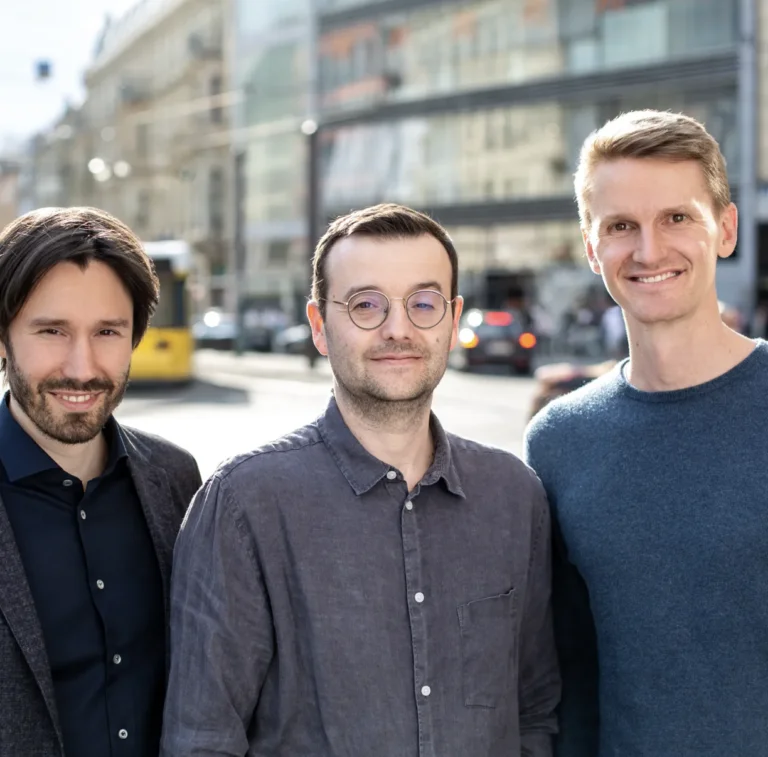
Chen co-founded Ropedia with Fangzhou Hong, chief technology officer, and Ziwei Liu, chief scientist and an associate professor at Nanyang Technological University in Singapore. Chen is known for his pioneering work in 3D computer vision and multimodal AI, while Hong previously worked on Meta’s egocentric multimodal intelligence research before contributing foundational research in 3D spatial intelligence.
About Ropedia
Ropedia builds data infrastructure for physical AI. Its data infrastructure, including the HOMIE hardware, data processing engine and structured multimodal datasets (flagship dataset: Xperience-10M), gives robotics and embodied AI systems structured records of real human experience for training and simulation. Founded in Singapore in the second half of 2025 by Zhaoxi Chen, Fangzhou Hong and Ziwei Liu, Ropedia is headquartered in Singapore with an additional office in Mountain View, California. For more information, visit ropedia.com.
Contacts
Media Contact
Joe Valensky
PRforRopedia@bospar.com