Insider Brief
- Corma, the first frontier AI lab for defensive cybersecurity, announced $60 million in seed funding led by Sequoia Capital, alongside Khosla Ventures and Coatue, and is already working with Fortune 100 companies.
- In simulations using models like OpenAI’s GPT and Anthropic’s Claude, Corma found AI attackers succeeded 88% of the time while AI defenders detected just 12%, highlighting a growing imbalance between offensive and defensive AI cybersecurity capabilities.
- Since launching six weeks ago, co-founder and CEO Alon Pluda’s company has deployed its AI workforce at Fortune 100 and Fortune 500 organizations, reducing threat response times by more than 94% and expanding security coverage by 15 times across different security functions.
PRESS RELEASE — Corma, the first frontier AI lab for defensive cybersecurity, announced $60 million in seed funding led by Sequoia Capital, alongside Khosla Ventures and Coatue. Already working with Fortune 100 companies, Corma is developing the first foundation model purpose-built for defensive cybersecurity, tackling a rapidly growing challenge the world is only beginning to confront: AI’s offensive cybersecurity capabilities are advancing at an extraordinary pace, while its defensive cybersecurity capabilities continue to fall short of protecting organizations in real-world environments.
Foundation models such as OpenAI’s GPT, Anthropic’s Claude, and Google’s Gemini have advanced at an extraordinary pace over the past few years, particularly in coding and software reasoning. These systems can now write and refine software, identify and remediate bugs, reason through complex environments, and orchestrate tools across multi-step workflows. Those same capabilities map directly to offensive security. Vulnerability research and exploit development are, at their core, code-reasoning problems executed against bounded targets. When combined with agentic execution, these models move beyond assisting attackers to autonomously carrying out end-to-end attack chains, as demonstrated in Anthropic’s Mythos disclosure.
But defensive cybersecurity — everything outside of code security — demands a fundamentally different set of capabilities. Rather than code reasoning and generation, it requires digging through massive volumes of security data (such as audit logs, events, and network flows), correlating weak signals over long time horizons, and maintaining extreme consistency across thousands of decisions in sequence.
Corma’s research shows just that. Using realistic enterprise environments modeled after Fortune 500 organizations, complete with the dozens of security tools typically deployed in large enterprises, Corma ran hundreds of simulations with leading AI models such as OpenAI’s GPT and Anthropic’s Claude. First, the models were tasked with acting as attackers, planting persistent threats inside enterprise systems. The same models were then asked to defend those environments, locating and remediating the threats they had created. The results were consistent: in nearly every case, the same AI model that executed an end-to-end attack couldn’t defend against the very attack it carried out — AI attackers succeeded 88% of the time, while AI defenders detected just 12%. This highlights a growing imbalance with major implications for cybersecurity.
“The race to general intelligence in cybersecurity has already begun, and the attackers have a significant head start,” said Alon Pluda, Co-founder and CEO of Corma. “AI-powered attacks are operating at a speed and sophistication that neither human teams, better tooling, nor general-purpose AI can match. It requires a complete AI-powered defensive workforce, built from the ground up for cybersecurity, that gives defenders the same speed, sophistication, and generalization that AI has already given attackers. Corma’s mission is to make sure the defenders win this race — and every challenge that comes next.”
Corma is building the first foundation model purpose-built for defensive cybersecurity. It powers Corma’s AI agents, allowing them to outperform agents built on other models while generalizing across the full spectrum of defensive security tasks. Organizations onboard Corma much like they would a new team member. Once deployed, Corma’s agents can operate across virtually every area of defensive cybersecurity, continuously learn the environment around them, and scale to meet demands that no team could cover alone.
Since launching just six weeks ago, Corma’s AI workforce has been deployed at Fortune 100 and Fortune 500 organizations across healthcare, financial services, energy, critical infrastructure, retail, and other sectors. Early deployments have reduced threat response times by more than 94%, expanded security coverage by 15 times across different security functions, and uncovered multi-stage attack campaigns that would have otherwise gone undetected.
“Corma has trained its model for the complexity of real-world attacks and is building the intelligence layer defense actually needs,” said Shaun Maguire, Partner at Sequoia. “Agentic AI gives attackers a structural speed advantage, but Alon’s hacking talent paired with Corma’s frontier AI research helps companies combat these threats at scale.”
“AI is reshaping cybersecurity in ways that increasingly extend beyond the enterprise to national security and geopolitical stability,” said Vinod Khosla, founder of Khosla Ventures. “As cyberattacks become more autonomous and scalable, the stakes move beyond data and finances to critical infrastructure, healthcare systems, and essential services where failures can have real-world consequences. That is why we need entirely new approaches to cyber defense and teams like Corma pursuing one of the hardest problems in cybersecurity.”
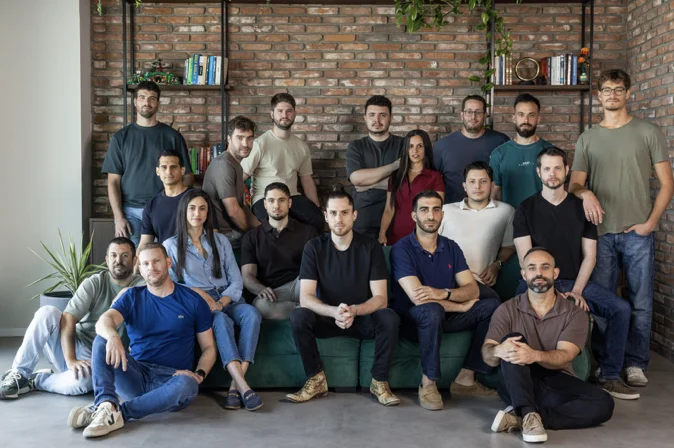
Corma brings together a first-of-its-kind combination of expertise across pre-training, post-training, offensive and defensive cybersecurity — uniting frontier AI researchers from Google and DeepMind with cybersecurity experts from the most elite groups within Israel’s 8200 Unit and the world’s leading cybersecurity companies. It is the type of interdisciplinary team required to tackle Corma’s mission, long considered “the holy grail of cybersecurity.”
About Corma
Corma is the first frontier AI lab for defensive cybersecurity. The company is building the first foundation model purpose-built for defensive cybersecurity, powering a new kind of AI native defensive workforce that gives security teams the same speed, sophistication, and generalization that AI has already given attackers. In a world where AI-powered attacks are advancing at unprecedented speed, Corma’s mission is to make sure the defenders win the race — and every challenge that comes next. Founded in 2025 and headquartered in Tel Aviv and San Francisco, Corma is backed by Sequoia Capital, Khosla Ventures, and Coatue.”
Contact info:
Yuval Porat
Media Consultant
[email protected]