
Insider Brief
- RLWRLD and CJ Logistics expanded their collaboration to develop and test AI systems for logistics robots, with plans to pursue commercial deployments in South Korea and overseas markets.
- The companies will conduct proof-of-concept projects using RLWRLD’s robotics foundation model technology in CJ Logistics operations, then potentially expand into additional logistics processes and Logistics as a Service offerings.
- RLWRLD said its RLDX-1 model uses visual and other sensor data to help robots interpret their surroundings and act on tasks, while the partners also plan joint sales efforts and strategic partnerships in overseas markets.
RLWRLD and CJ Logistics have expanded their collaboration to develop and test AI systems for robots used in logistics, plus explore commercial deployments in South Korea and overseas markets.
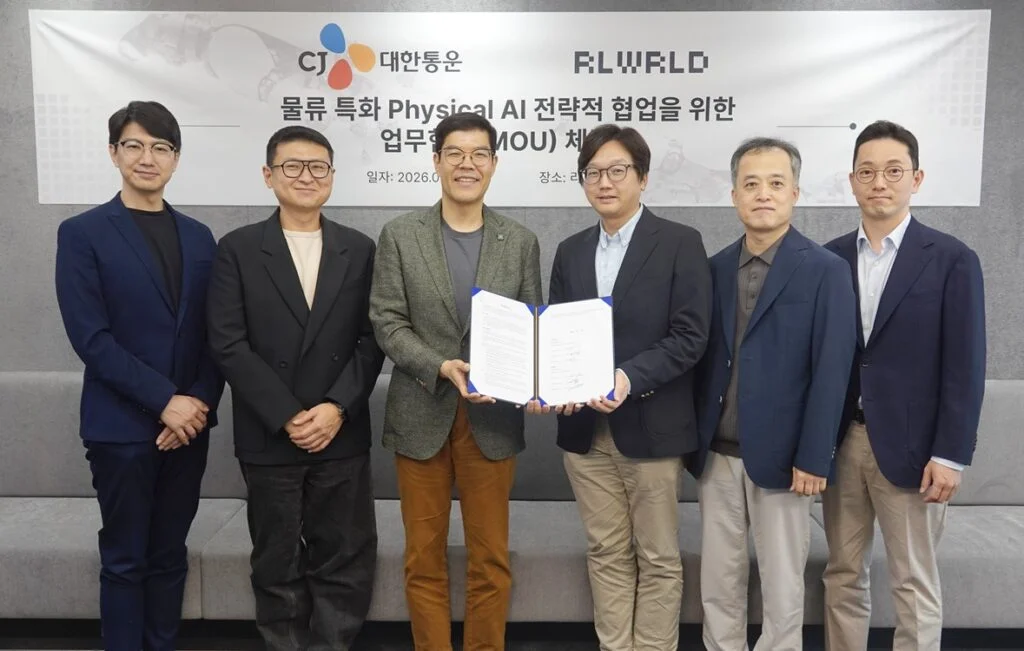
According to RLWRLD, the companies signed a memorandum of understanding to jointly develop what RLWRLD calls Robotics Foundation Model, or RFM, technology for logistics operations. The agreement combines RLWRLD’s robotics AI software with CJ Logistics’ facilities, operational infrastructure and commercialization capabilities.
“For physical AI to translate into tangible productivity gains in industry, it is essential to go beyond validating technology in the lab, accumulate data from real-world operations, and feed that data back into continuously improving AI intelligence,” Junghee Ryu, CEO of RLWRLD, said in the announcement. “By combining CJ Logistics’ operational capabilities with RLWRLD’s RFM and physical AI technologies, we will develop logistics-focused physical AI models that address real-world challenges in logistics and can be scaled to global markets.”
The companies plan to select logistics processes for initial deployments and conduct proof-of-concept projects to test robotic tasks in working environments, according to RLWRLD. Based on those results, they want to expand the technology to additional logistics processes and work offering Logistics as a Service, or LaaS.
LaaS allows companies to use logistics capabilities as a service rather than building and owning logistics centers, transportation networks and automation systems themselves. Services can include order processing, warehousing, picking and packing, delivery, returns and data analytics, RLWRLD noted.
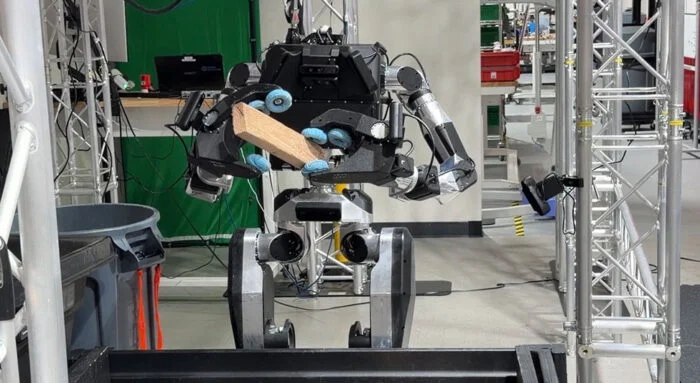
CJ Logistics has been expanding the use of AI-based automation in its operations, including humanoid robots. Logistics facilities handle products with different sizes, shapes and materials, while working conditions can change, creating tasks that require robots to adjust their actions rather than follow only predefined movements.
RLWRLD said it is developing its RLDX-1 robotics foundation model for those types of tasks and the system uses visual and other sensor data to interpret a robot’s surroundings and determine how it should act, with a focus on manipulation and dexterity in industrial environments.
The companies also plan to use technology and operating experience developed in Korea to explore overseas opportunities. RLWRLD and CJ Logistics said they intend to pursue joint sales efforts and strategic partnerships while evaluating whether their logistics-focused robotics technology can support LaaS offerings in other markets.
Featured image credit: RLWRLD