Insider Brief
- Imperial College London spinout Machenta raised $40 million in seed funding to develop robot foundation models that the company says can learn new tasks from a single demonstration.
- Creandum and Union Square Ventures led the round, which Imperial described as the largest seed financing raised by a U.K. robotics startup.
- Machenta said its model is pre-trained entirely on simulated data and has been demonstrated on tasks including packing and tidying across multiple robot types, including humanoids.
Imperial College London spinout Machenta has raised $40 million in seed funding to develop AI models designed to let robots learn new tasks from a single demonstration.
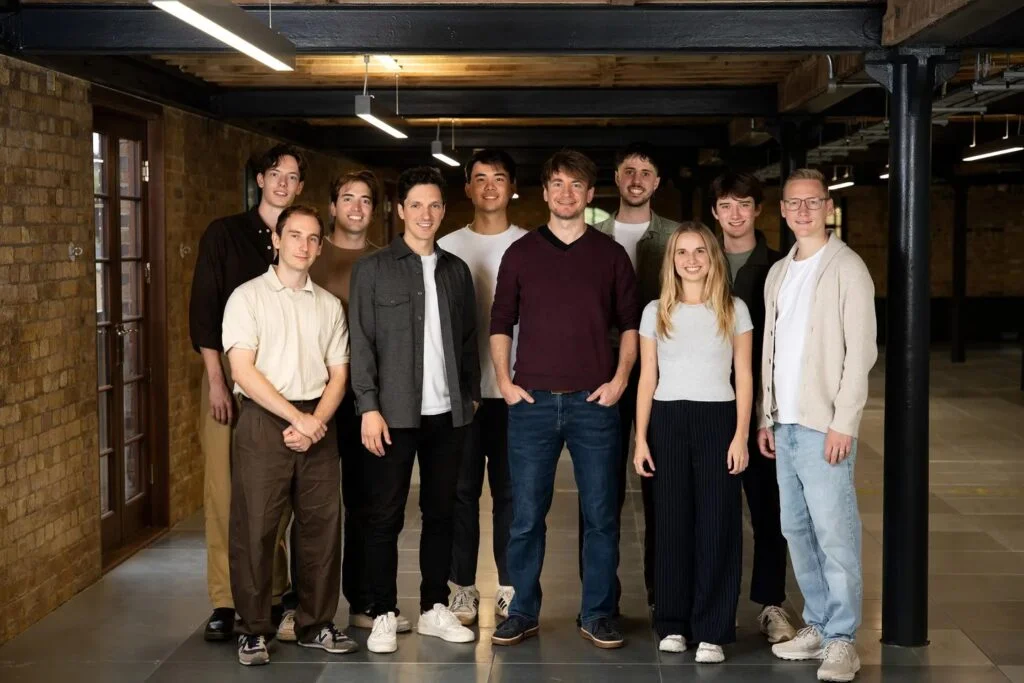
According to Imperial, Creandum and Union Square Ventures led the round, which Imperial described as the largest seed financing raised by a U.K. robotics startup. Machenta will use the funding to scale its robot foundation model and expand its team at a new office and laboratory in King’s Cross, London.
The company grew out of research at Imperial’s Robot Learning Lab, where Edward Johns, a professor of robot learning and Machenta’s co-founder and CEO, and Ph.D. student Vitalis Vosylius spent several years studying how robots could learn physical tasks more quickly.
Current robot-learning systems often require repeated demonstrations and additional model training before a robot can perform a new task. Machenta said its model is designed to reduce that process to a single demonstration, allowing an end user to show a robot what to do without retraining the system for each new task.
“We’ve spent years trying to understand what it would take for robots to learn at the speed of a human,” said Johns. “That is what instant robot learning is about.”
The company said it has demonstrated a single model learning tasks including packing and tidying across different types of robots, including humanoids. Machenta is now working to scale the model across different robots and tasks rather than training separate systems for individual machines or applications.
Machenta is also taking a different approach to the data used during pre-training. Rather than relying on large datasets collected from real-world human demonstrations, the company said its model is pre-trained entirely on simulated data. That could reduce the amount of physical data collection required before a robot system is deployed.
Imperial noted the approach may also avoid some of the practical and privacy constraints associated with gathering large volumes of human demonstration data.