
Insider Brief
- Johnson & Johnson said the FDA granted De Novo authorization for its Ottava robotic surgical system, clearing the company to begin a limited U.S. commercial launch.
- The table-integrated soft-tissue robotic system is authorized for several general surgery procedures, including gastric bypass, gastrectomy, cholecystectomy, splenectomy, appendectomy and hiatal hernia repair.
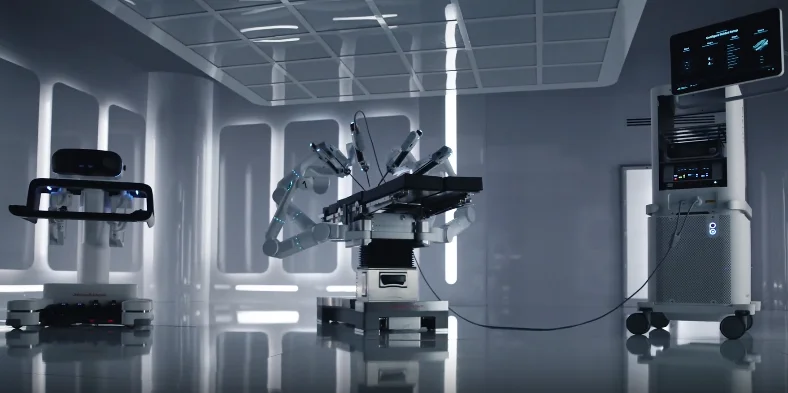
- Johnson & Johnson said Ottava’s robotic arms are built into the operating table, giving it a smaller footprint and connecting the system to digital tools for training, media and surgical data.
Johnson & Johnson announced the U.S. Food and Drug Administration granted De Novo authorization for its Ottava robotic surgical system, clearing the company to begin a limited U.S. commercial launch.
The company described Ottava as a table-integrated soft-tissue robotic surgery system and the FDA marketing authorization covers several general surgery procedures, including Roux-en-Y gastric bypass, gastrectomy, cholecystectomy, splenectomy, gastric sleeve, small bowel resection, appendectomy, lysis of adhesions, fundoplication and hiatal hernia repair.
Johnson & Johnson indicated it will launch the system with selected U.S. customers while it works to expand into additional procedures and regulatory markets. A U.S. clinical trial is ongoing for use of Ottava in inguinal hernia procedures.
“Surgical robotics will play an increasingly important role in surgical care, but it’s clear that what defined the last 25 years of surgery will not define the next 25,” noted Hani Abouhalka, Company Group Chair, Surgery, MedTech, Johnson & Johnson. “By opening up the way we think about architecture, data, and the very workflows of surgery itself, we have designed Ottava to deliver clinical and economic benefits and support surgeons and hospitals as the future of surgery unfolds.”
Ottava differs from many existing surgical robots because its robotic arms are built into the operating table. Johnson & Johnson said that design gives the system a smaller footprint and creates more space for surgeons and clinical teams in the operating room.
The company said first-generation features include:
Smaller footprint: The system integrates robotic arms into the operating table and takes up 30% to 50% less space than traditional boom- and cart-mounted systems, according to Johnson & Johnson.
Automated setup: Software coordinates four table-integrated arms and uses predefined procedural poses to help simplify setup and breakdown.
Synchronized movement: A feature called twin motion lets the table and robotic arms move together, allowing patient repositioning and access to different areas of the body with fewer adjustments during surgery.
Robotic instruments: The system includes instruments built for robotic surgery, including a two-in-one needle driver and monopolar curved scissors.
Digital connection: Ottava connects to Polyphonic for Ottava, a digital system designed to bring training, media and surgical data together for clinical teams.
Training support: Ottava education will include virtual, hands-on and immersive training for new and experienced robotic surgeons.
“Variability of surgical outcomes remains a challenge in healthcare,” added Peter Schulam, M.D., Ph.D., Chief Scientific Officer, MedTech, Johnson & Johnson. “While surgical robotics has helped augment surgical skill, the next generation of care must also integrate data and insights across the surgical ecosystem to support surgeon judgement and help improve patient outcomes. Ottava was designed with that connectivity in mind.”
Image credit: Johnson & Johnson