Insider Brief
- Bulwark Dynamics raised $6.8 million in seed funding and signed an agreement with Japan’s Onomichi Dockyard to support serial production of its Caravel autonomous landing craft.
- Caravel is designed to autonomously deliver cargo across unimproved shorelines without ports, piers or cranes, and Bulwark said a 15-foot prototype completed transit, beaching, cargo offload and retraction without human intervention.
- The company is also developing 35-foot and 55-foot variants for larger cargo loads, with initial applications focused on resupplying U.S. and allied forces across the Indo-Pacific.
Bulwark Dynamics has raised $6.8 million in seed funding and will be working with Japan’s Onomichi Dockyard to build its Caravel series of autonomous landing craft.
Investors include SBI US Gateway Fund, Archetype Ventures, Nēnē Ventures and Onomichi Dockyard, according to the California-based company. Bulwark said the new funding will support continued development and testing of production vessels while it works with Onomichi to expand manufacturing capacity. The company indicated it is also hiring across engineering, test operations and business development in the U.S. and Japan.
Bulwark noted the memorandum of understanding with Onomichi covers serial production of the Caravel series and the companies plan to manufacture the vessels in Japan using Onomichi’s existing shipyard. The companies are also discussing a dedicated site for serial production of unmanned vessels.
Caravel
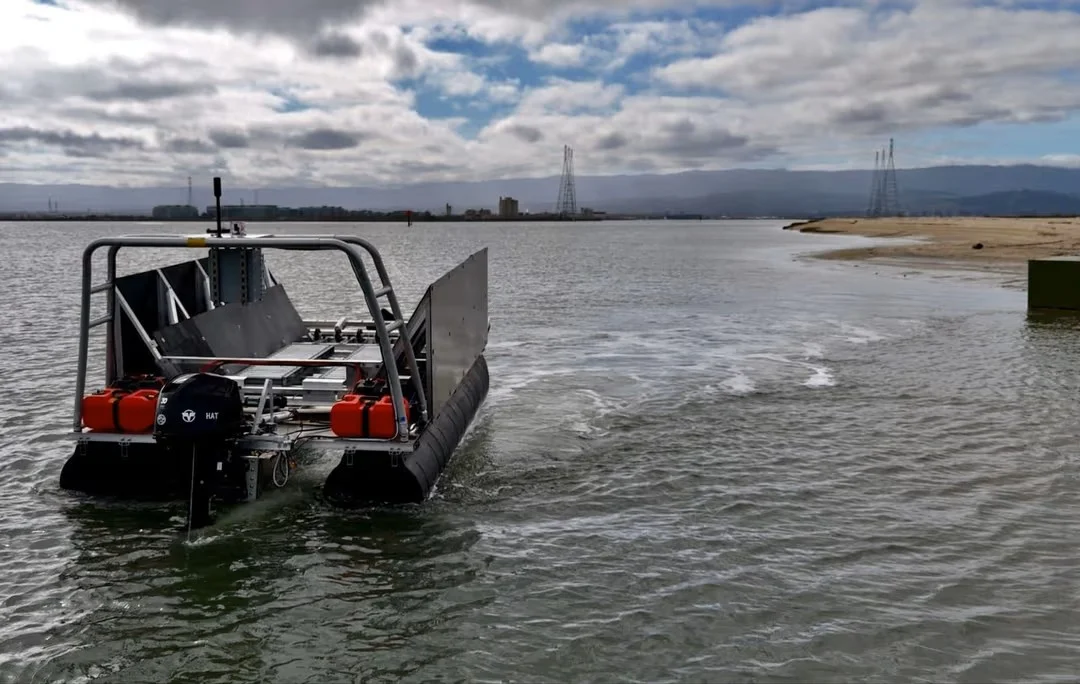
Caravel is an unmanned surface vessel designed to resupply military units over shorelines without requiring a port, pier or crane. Bulwark said the vessel can autonomously transit to shore, unload cargo and retract from the beach, including in areas where there is no GPS.
The company reported it demonstrated that full sequence with a 15-foot Caravel prototype in early 2026, completing unmanned transit, beaching, cargo offload and retraction without human intervention.
“In a contested environment, the attributes that make a logistics platform efficient are the same ones that make it a target: large, crewed, concentrated, and tied to a handful of fixed nodes,” Bulwark co-founder and CEO Nhat Lieu said in the announcement. “Sustainment has to survive to matter. Caravel takes people off the most exposed leg of the run and spreads the delivery across many low-cost hulls, so losing one is a bad day rather than the end of the resupply.”
Looking Ahead
Bulwark is also developing two larger versions and to support production at scale, the variants share major components, Bulwark noted.
Caravel 35: A 35-foot variant designed to carry one twenty-foot equivalent unit of containerized cargo.
Caravel 55: A 55-foot variant designed to carry two twenty-foot equivalent units.
Initially, the company is focusing on sustainment missions for U.S. and allied forces operating across the Indo-Pacific. Bulwark said the same autonomous landing capability could also be used for disaster relief when cargo must reach shorelines without port infrastructure.
Onomichi Dockyard, founded in 1943, operates two slipways in western Japan and has built bulk carriers, tankers, roll-on/roll-off vessels and ferries. Its group also includes Saiki Heavy Industries and delivers about 350,000 gross tons annually.
“Building unmanned systems at scale inside the theater, on the industrial base and supply chains an ally already has, does two things at once,” Lieu added. “It solves a problem the people running these missions have today, and it puts decades of allied know-how to work on American reindustrialization.”
Image credit: Bulwark Dynamics