
Insider Brief
- The U.S. Army selected five companies as winners of its xTechHumanoid competition, which assessed commercial humanoid robots and related technologies for potential military applications.
- ACES Group, IHMC Robotics, Hydroplane Limited, Ras Labs and Velocity Explorations were chosen from 103 submissions after nine finalists demonstrated systems addressing power, sensing, autonomy and command-and-control challenges.
- The Army said the competition will help guide further development of humanoid and autonomous systems for dangerous or physically demanding missions while reducing soldier exposure and preserving combat power.
The U.S. Army named five companies as winners of its xTechHumanoid competition, part of an effort to assess how commercial humanoid robotics and related technologies could support future military operations.
According to the U.S. Department of War, the competition, run by the Army FUZE xTech program and the Humanoid Community of Collaboration, drew 103 white-paper submissions covering humanoid robots and supporting technologies. Ten companies advanced as finalists, with nine demonstrating their systems for military leaders, engineers and evaluators at Marine Corps Base Quantico, Va., Sept. 9-10.
The finalists provided a look at both complete humanoid systems and technologies that could address individual challenges such as power, sensing and command and control.
The Army selected the five winners Sept. 11:
- ACES Group developed an integrated power system with scalable energy storage for applications ranging from larger infrastructure to individual humanoid robot batteries.
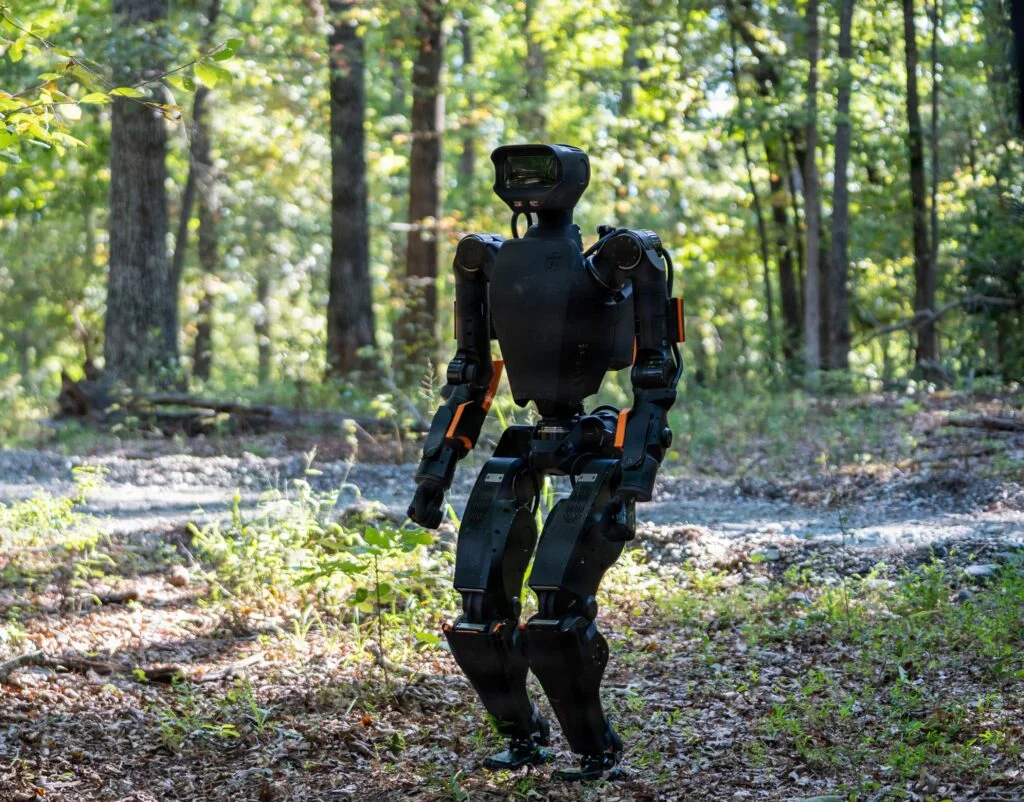
- IHMC Robotics demonstrated Alex, a humanoid robot with impact-resistant actuators, ballistic protection and hybrid autonomy combining artificial intelligence with human control.
- Hydroplane Limited developed a compact, lightweight mobile power-generation system intended to provide longer-duration power in contested logistics environments.
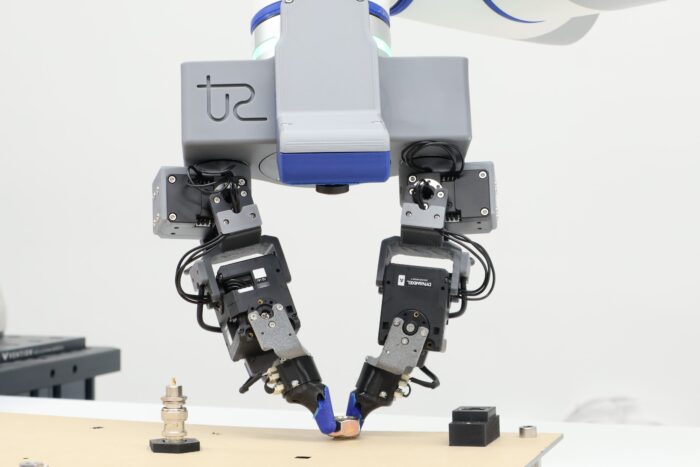
- Ras Labs demonstrated fingertip tactile sensors designed to detect force, object shape, slipping and other physical interactions.
- Velocity Explorations developed software that translates trusted information and command intent into individual actions for humanoid robots.
The DOW noted that the Army is examining humanoid robots as part of its effort to use robotics and autonomy for dangerous or physically demanding tasks while reducing soldier exposure and preserving combat power. The Humanoid Community of Collaboration, was established in December 2023 to support the technical development and operational integration of humanoid systems.
“Humanoid robots are part of a broader autonomy push to increase the depth and breadth of robotic platforms, and [the] components industry can provide for a range of missions,” Army’s chief technology officer Alex Miller.said in the announcement “We are identifying the problems, mission needs and opportunities to enable our formations with the right mix of tools. xTech is our method of surveying the industry landscape and fast-tracking promising technology rather than falling victim to yearslong studies.”