
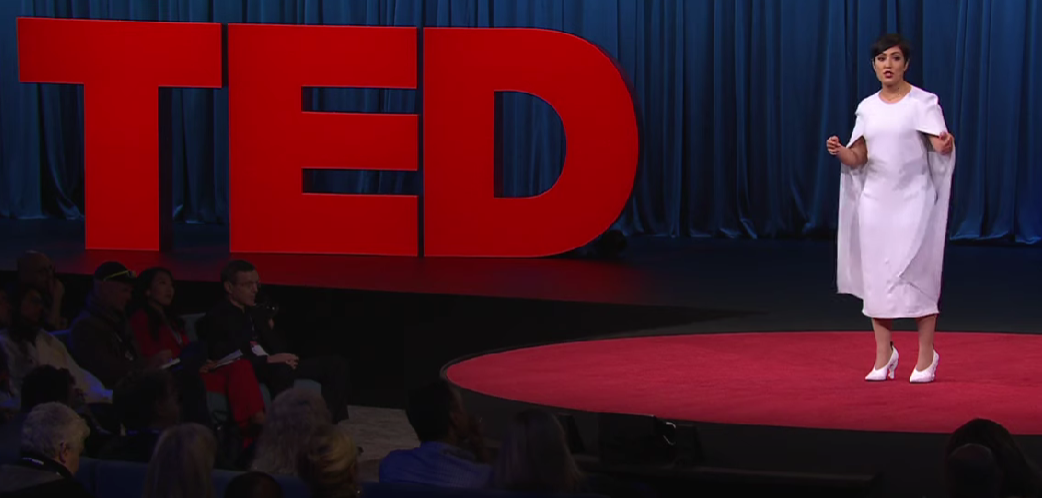
Given that technology has become an integral part of almost every walk of life, the right to repair is part and parcel of our interaction with advanced systems, including the domain of artificial intelligence (AI) itself. Rumman Chowdhury, CEO and co-founder of Humane Intelligence, pointed this out clearly in her TED talk. She effectively uses the example of farmers who have AI-powered tractors.
Chowdhury started with a compelling anecdote: “I want to tell you a story about artificial intelligence and farmers. Now, what a strange combination, right?”
Relatively speaking, this story demonstrates how farming today is very technologically driven: for instance, computer vision allows farmers to predict crop yield, AI identifies pests, and predictive analytics help the weather forecast. Whereas back in 2017, John Deere patented smart tractors, rendering all farmers fixing their equipment illegal and monopolizing its licenses into the hands of their technicians.
“Farmers would have to wait for weeks while their crops rot and pests took over,” said Chowdhury.
This situation led to a significant pushback from the farming community. Some farmers learned to program and collaborated with hackers to create patches for their systems. It all came to a head at DEFCON 2022 when a hacker presented the crowd with a way to get into a John Deere tractor. If anything else, this showed clearly the vulnerability of the technology and the need for ownership over the equipment to rest with someone. Chowdhury noted: “This is illegal, but there are people trying to change that.”
The essence of this story extends beyond farming to all AI systems. She argued for the need to “fix AI technologies — be it a smart toothbrush or a washing machine.” She warned that confidence in AI is taking a public downturn; one poll by Pew recently revealed that more Americans are worried than are enthusiastic about this technology. That international outlook is not much better, reflecting that in the global community, there is more potential for harm than good in AI.
Chowdhury’s experience as a social scientist and AI developer fuels her frustration with this disconnect.
“People feel like an afterthought,” she said, highlighting how data is often harvested without consent to build sophisticated systems that ultimately dictate life opportunities. This lack of involvement from the general public in AI development processes is a significant barrier to trust and acceptance.
One of Chowdhury’s proposed solutions is red teaming, a process where external experts are brought in to test the robustness of systems. This practice, borrowed from the military and cybersecurity, aims to identify and fix vulnerabilities.
“We need a better feedback loop between the people who are making these systems, and the people who are best determined to tell us how these AI systems should interact in their world,” said Chowdhury.
Chowdhury’s call to action is clear: for AI to fulfill its potential, non-experts must have the tools and rights to repair and improve these systems. “Technologists can’t do it alone. We can only do it with you.” This inclusion is not just a matter of practicality but a necessity for achieving the promised benefits of AI.
Featured image: Credit: TED