
Insider Brief
- Avatar Robotics raised $6.5 million in seed funding to expand humanoid robot deployments in warehouses and factories and advance software that reduces reliance on remote operators.
- AlleyCorp led the round, while Defy.vc led an earlier pre-seed financing and Headline, Henry Ford III, Refashiond and other investors also participated.
- The company said its robots have helped pack, sort and ship more than 900,000 products since December 2025, using human operators to complete tasks while generating data to improve autonomy.
Avatar Robotics has announced $6.5 million in seed funding to deploy more humanoid robots in warehouses and factories, expand its fleet and develop software that can reduce the machines’ dependence on remote human operators.
AlleyCorp led the seed round, while Defy.vc led an earlier pre-seed financing, according to Avatar Robotics. Headline, Henry Ford III, Refashiond, Paul Vogel, Jack Huffard and Samuel Udotong also participated. The company did not disclose the size of the pre-seed round or its total funding.
Avatar said it will use the new capital to speed up development of its autonomy software, expand customer deployments and hire additional engineering and operations staff.
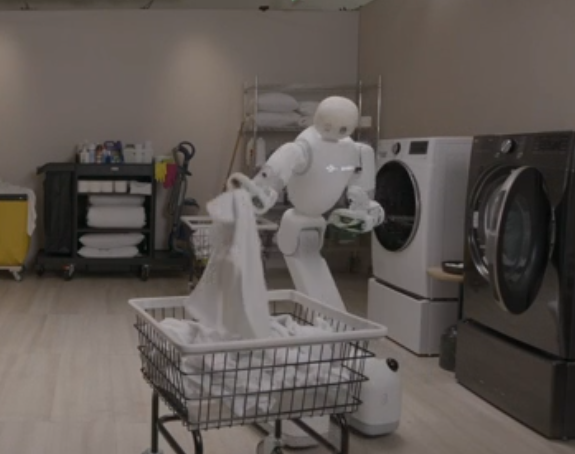
The startup is building humanoid robots for industrial tasks including picking, packing, sorting, kitting, inventory counting and moving materials. It is targeting warehouses and manufacturing facilities that struggle to hire and retain workers for repetitive or physically demanding jobs, according to the company.
Aiming to Build a “New Kind of Workforce”
“The United States has a massive labor shortage, and the warehouses and factories that power daily life are struggling to hire enough workers,” founder and CEO Colin Webb said in the announcement. “For the first time, affordable robotics, high-speed connectivity, and AI-driven autonomy make it possible to create a new kind of workforce. Avatar Robotics gives businesses access to scalable industrial labor, while enabling workers to operate fleets of robots remotely from safer and more comfortable environments. Over time, this can dramatically lower the cost of goods and expand economic opportunity to people anywhere in the world.”
Avatar’s system combines robots, remote operators and AI rather than depending on full autonomy from the start. Human operators can control the machines when needed, allowing customers to use them in active facilities while the company gathers data from each completed task.
That data is then used to improve the robots’ autonomous capabilities, according to Avatar. The company’s longer-term goal is to let one employee oversee fleets of robots instead of continuously controlling a single machine.
The approach is intended to avoid some of the limits of conventional industrial automation, which often requires fixed production layouts, narrow tasks and costly integration. Avatar said its robots can be placed into existing workflows and adapted as customer needs change.
The San Francisco-based startup launched in December 2025 and said its robots have since helped pack, sort and ship more than 900,000 products in customer facilities. That includes work for a large global beauty retailer, which Avatar did not identify.
Avatar also said it has begun expanding beyond a pilot with a multibillion-dollar warehouse operator. The deployment supports sorting and picking work, with additional customer installations underway.
The company did not disclose how many robots it currently operates, the value of its customer contracts or the price of its service.
The Company
The company’s team includes people with experience at Cruise, Apple, Tesla, Intuitive Surgical and Unity, along with researchers trained at the Massachusetts Institute of Technology, according to Avatar. Webb previously worked on autonomous drones and self-driving vehicles and co-founded an AI company that was later acquired. Nenye Anagbogu, who worked with Webb at that company, has joined him again at Avatar.
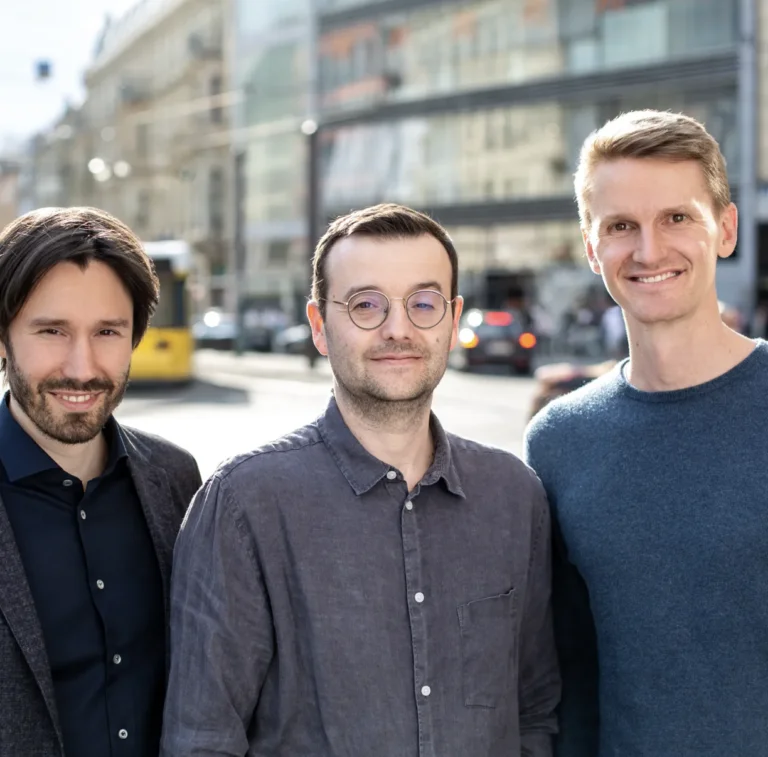
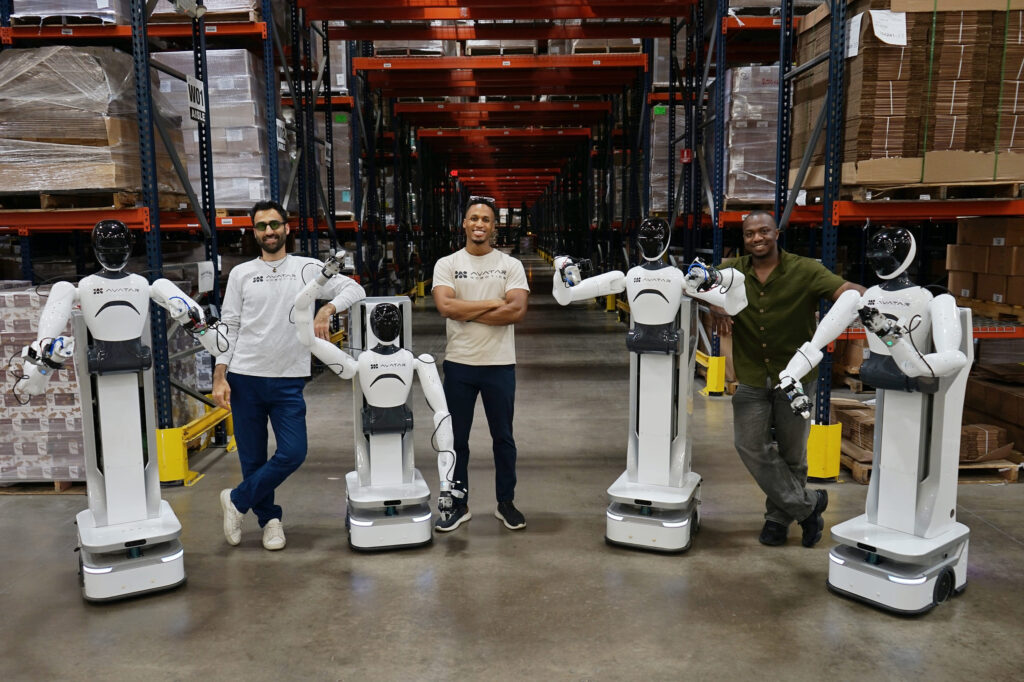
Featured image: Avatar Robotics founder Colin Webb, CEO (center), Hamid Farzaneh, Ph.D., Founding Engineer (left), and Nenye Anagbogu, Chief Screwdriver (right). (Credit: Avatar Robotics)