Foundry Robotics Raises $100M in Series A Funding to Expand Autonomous Assembly for Defense, Industry
 By Greg Bock · · 3 min read
Insider Brief
- Foundry Robotics raised $100 million in Series A funding to expand its autonomous assembly operations for defense and industrial hardware, including its 130,000-square-foot Emeryville manufacturing site.
- Marlinspike Partners led the round, with participation from Khosla Ventures, Red Glass Ventures, SE Ventures, Wing VC, Axiom Ventures, Hanabi and Zero Shot Fund.
- Foundry uses AI-powered robotic cells and its FoundryOS software to assemble products including drones, autonomous-vehicle components, ground robots, satellites and computing equipment under a manufacturing-as-a-service model.
Foundry Robotics has raised $100 million in Series A funding to expand its robotic assembly capacity for defense and industrial hardware.
Marlinspike Partners led the round, with participation from Khosla Ventures, Red Glass Ventures, SE Ventures, Wing VC, Axiom Ventures, Hanabi and Zero Shot Fund, according to Foundry. The financing will support expansion of the Emeryville facility, deployment of its AI models and hiring across robotics research, engineering and factory operations.
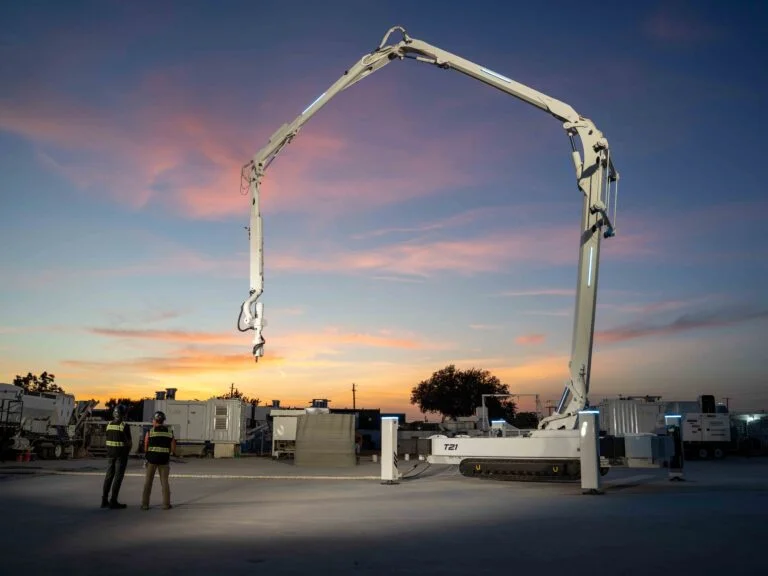
Foundry said its Emeryville manufacturing site now spans 130,000 square feet, expanding the company’s capacity to assemble defense and industrial hardware. The company says its Emeryville operation gives it 20 times the capacity as before and is the first autonomous factory in the U.S. focused on assembly.
Foundry currently assembles complex electromechanical products including drones, autonomous-vehicle subassemblies, wire harnesses, underwater vehicles, ground robots, satellites and computing equipment.
“We believe the factories that revive America’s manufacturing sector will need to be rethought from the ground up rather than retrofitting one aspect in an existing factory,” founder and CEO Adarsh Kulkarni said in the announcement. “Our approach is to own the entire final assembly stack and integrate intelligence at every layer — own the buildings that manufacture for our customers while orienting them for robotics deployment. Our mission is to revitalize U.S. manufacturing and create more capacity to build and scale critical product assembly.”
Foundry owns and operates the production facilities rather than selling automation equipment to manufacturers. Under its manufacturing-as-a-service model, customers bring products to Foundry, which handles assembly using robotic cells, AI software and manufacturing workers.
Flexible Robotic Assembly
Foundry is developing factories that can shift robotic equipment between different products rather than building a dedicated assembly line for each one.
Its robotic cells use AI models trained on assembly tasks, while FoundryOS connects robots, factory operations and cloud software. According to the company, data generated during production is fed back into the models so the same equipment can be adapted to additional products over time.
Foundry said the approach is intended to reduce the time and investment required to begin producing new hardware. The company said it can take customers from design to production in weeks without requiring them to build their own production lines or retool existing factories.
The initial focus is on higher-value products whose assembly can involve frequent design changes or relatively limited production volumes. Foundry is serving both defense and commercial customers.
The company pointed to unmanned systems as one application where manufacturers are seeking additional domestic production capacity. Other target markets include telecommunications and data-center infrastructure, robotics and aerospace hardware.
Robotics and Manufacturing Team
Foundry was co-founded by Kulkarni and Emmanuel Lamacchia. Kulkarni previously worked at Ghost Robotics, where he helped develop legged robots for military applications, and later served as Scale AI’s first head of robotics. Lamacchia previously managed Tesla’s Model Y program, according to Foundry.
The company has also hired robotics researchers, AI and software engineers and manufacturing specialists to work directly in its factories. Its leadership team includes former Tesla software executive Anup Karmakar as well as military veterans with experience at Raytheon and Northrop Grumman.