Zipline Raises $1.5B in New Funding to Expand US Autonomous Delivery Network
 By Greg Bock · · 3 min read
Insider Brief
- Zipline has raised $1.5 billion at a $21.5 billion post-money valuation to expand U.S. drone manufacturing and its autonomous delivery network, with new agreements involving Walmart and Uber.
- Walmart plans to add 300 Zipline delivery sites, while Uber is targeting 1 million daily deliveries by 2029, as Zipline reports more than 1 million deliveries in Dallas-Fort Worth this year and a median delivery time of 19 minutes.
- Zipline has introduced quieter flight technology and longer-range aircraft, while its autonomous fleet has logged 150 million commercial miles without a safety incident and its medical deliveries help save an estimated 14,000 lives annually.
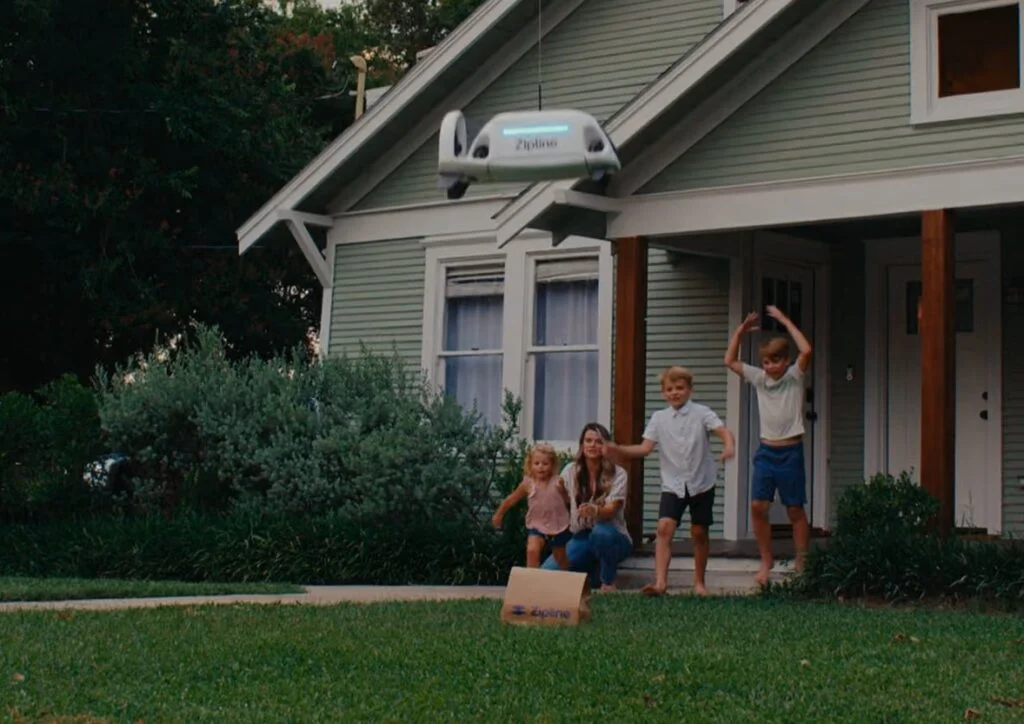
Zipline has raised $1.5 billion at a $21.5 billion post-money valuation to expand its U.S. drone delivery network, as the company prepares to add hundreds of locations through partnerships with Walmart and Uber.
According to the company, the funding round was led by Paradigm, WCM Investment Management and Layer Global, with participation from Valor Equity Partners, Fidelity Management & Research Company, Uber, Tiger Global, J.P. Morgan, ARK Invest and Salesforce Ventures.
Zipline indicated it will use the capital to expand its U.S. manufacturing facilities and hire additional employees as it builds a nationwide autonomous delivery network.
The investment comes as Zipline expands its commercial operations. Walmart and Zipline have reached a new multiyear agreement to launch 300 additional delivery sites, with the possibility of further expansion. Uber, meanwhile, is targeting one million daily deliveries through Zipline by 2029.
According to Zipline, hundreds of businesses now generate revenue through its delivery network, with dozens of new merchants joining each week. Existing partners are also expanding their operations to additional locations.
Delivery Growth and Customer Demand
Zipline reported several operating and customer results:
Sales growth: The same restaurants reported a 26% increase in delivery gross merchandise value, with Zipline orders accounting for 80% of the increase.
Delivery volume: More than 1 million deliveries completed in the Dallas-Fort Worth metropolitan area during 2026.
Delivery speed: A median of 19 minutes from checkout in October, compared with more than 30 minutes for traditional delivery services. Bakery orders had a median delivery time of 10 minutes.
Restaurant delivery revenue: Zipline’s share of delivery revenue among a group of long-standing restaurant partners rose from 10.8% in March to 34.9% in October.
According to the company, the additional Zipline orders did not reduce demand through other delivery platforms.
Zipline said it is also working with businesses developing locations specifically for drone delivery. Wonder, for example, is building new storefronts and kitchens designed to operate with Zipline’s service.
The company said it sees opportunities to extend restaurant delivery beyond the relatively short distances typically served by ground transportation, where longer trips can increase costs and delivery times.
Quieter Aircraft and Longer-Range Deliveries
Alongside its network expansion, Zipline has introduced technology designed to improve the performance of its autonomous aircraft. Its new sound-optimized dynamic flying system, which Zipline describes as an industry first, is designed to reduce flight noise while improving speed and energy efficiency. The company also introduced a next-generation aircraft designed to fly higher and more quietly, carry heavier orders and travel longer distances.
Zipline said its autonomous aircraft have accumulated 150 million commercial flight miles without a safety incident since the company began operations a decade ago.
Its business also includes long-range medical deliveries across multiple continents. The company estimates that these operations help save more than 14,000 lives annually. In Côte d’Ivoire, Zipline is developing a nationwide medical delivery network expected to serve more than 2,200 healthcare facilities and approximately 12 million people.