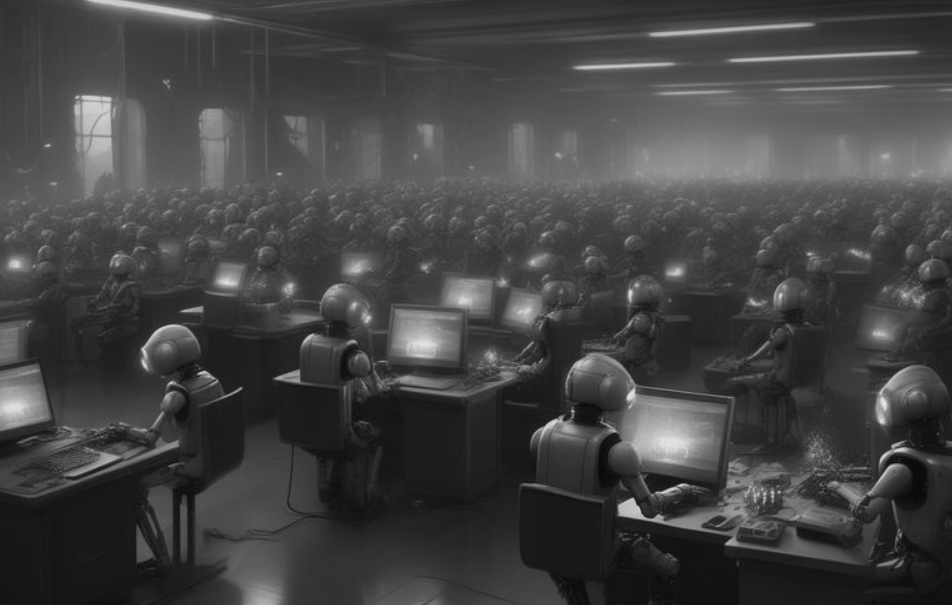
As AI technology continues to evolve, it is increasingly taking over roles traditionally performed by humans, leading to significant changes in the job market. A recent report from ResumeBuilder of 750 business leaders revealed that in 2023, 37% of business leaders reported AI replacing workers with 44% predicting layoffs in 2024 due to AI efficiency. Further, an Asana survey indicates that employees believe 29% of their work tasks could be automated by AI. This shift is particularly evident in areas like research and data analysis. Despite Elon Musk’s assertion that AI could eventually eliminate the need for human jobs, the reality is more nuanced.
Many experts argue that AI is not just about replacing jobs but also about transforming them.
Julia Toothacre, a career and resume strategist at ResumeBuilder, acknowledges that the statistics derived from their research might not completely represent the wider business environment.
“There are still so many traditional organizations and small businesses that do not embrace technology the way that some of the larger companies do,” said Toothacre.
Alex Hood, who serves as the Chief Product Officer at Asana, a company specializing in project management and collaboration software, suggests that a significant portion of our workday — about 50% — is dedicated to what he terms “work about work.” This concept encompasses activities like providing status updates and communicating across different departments, which, according to him, are not the central elements of our job responsibilities.
“If that can be reduced because of AI, that can be a great unlock,” said Hood, also arguing that the absence of context in the statistics, which indicate and forecast layoffs due to AI, tends to amplify fears rather than accurately represent the actual situation.
Marc Cenedella, meanwhile, the founder of Leet Resumes and Ladders, believes that as AI assumes responsibility for task-oriented jobs, it opens up prospects for humans to engage in more valuable activities.
He explains that workers across the economy can concentrate on aspects such as integrating, structuring, or outlining the nature of these task-based jobs and draws a parallel with the office environments of the mid-20th century, where whole floors were dedicated to typists, a role that eventually became obsolete with the advent of efficient word processors, while also noting that contemporary white-collar professionals carry a certain degree of personal accountability in their roles.
“Part of your job is to keep developing new skills,” he said. “If you learned some software five years ago, that’s not enough. You’ve got to learn new software today.”
The United Nations reports that white-collar and clerical workers make up a significant portion of the global workforce. The integration of analytical and communication tools has continuously reshaped knowledge work, with generative AI being the latest development in this ongoing evolution. However, the digital divide remains a critical issue, as 34% of the global population still lacks internet access, affecting the broader implications of AI in the workforce.
For professionals, adapting to an AI-dominated work environment involves understanding how to work alongside these technologies. Even in fields prone to AI automation, human intervention is necessary for guiding AI, interpreting its outputs, and implementing actions. Professionals like Ven Hood, engaged in developing AI-powered collaboration and project management tools, demonstrate the potential of AI to enhance work processes. Hood’s use of AI to evaluate team interactions exemplifies the creative application of AI in the workplace.
Despite concerns over AI-induced layoffs, historical trends suggest that technological advancements do not typically lead to widespread unemployment. Instead, they often lead to the creation of higher-value work. As Cenedella points out, the workforce has always shown adaptability to technological changes, indicating that future generations of AI might be integrated into more productive and high-value tasks.
“My advice for anyone is to understand how AI could impact your position in your industry right now,” said Toothacre. “At least you have an idea of what to potentially expect versus having no idea what’s going on.”
“You learn it by asking it questions and seeing what it’s capable of, and in some ways being disappointed, and in some ways being wowed, and then leaning into that,” Hood said. “The best thing that employers can do is give folks the ability to understand what the art of the possible is through individual experimentation using AI today.”
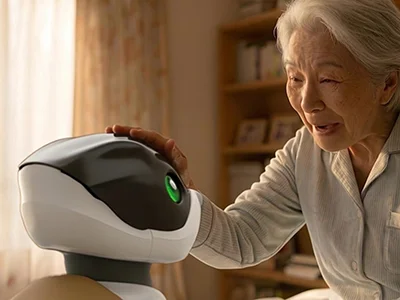
Featured image: Credit: nastya m, PlaygroundAI