Insider Brief
- Robotiq released three open-source software tools for its adaptive grippers, giving robotics developers company-maintained options for ROS 2, C++ development and Nvidia Isaac Sim.
- The release includes a ROS 2 package, standalone C++ SDK and updated Isaac Sim assets with closed-loop kinematics, all available through Robotiq’s GitHub repository.
- The tools are the first components of Robotiq’s Contact Core software layer for physical AI, with embedded intelligence at the point of contact planned for the fourth quarter.
Robotiq has released three open-source software tools for its adaptive grippers, giving robotics developers company-maintained options for ROS 2, C++ development and Nvidia Isaac Sim.
According to the company, the releases include a C++ software development kit, an official ROS 2 package and updated Isaac Sim assets. All three are maintained and optimized by Robotiq and are available through the company’s GitHub repository.
Robotiq noted that developers have used its grippers with ROS 2 and Isaac Sim for years, often relying on community-built drivers and simulation models.
‘‘What changed is the demand,” CTO AI Vincent Duchaine said in the announcement. “A physical AI application asks far more of a gripper than a conventional one ever did. It calls for higher fidelity in simulation, tighter control loops on real hardware, much more of what the gripper can report about what it is holding, and deployments that keep collecting this data across millions of cycles. The tools move fast on their own account and staying compatible is continuous work. Packages maintained in spare hours were never meant to carry that kind of weight.”
The releases include:
- ROS 2 package: Designed as a drop-in replacement for the community driver already used by many labs, with matching interfaces intended to make switching easier.
- C++ SDK: Provides standalone control capabilities for teams building their own robotics software stacks.
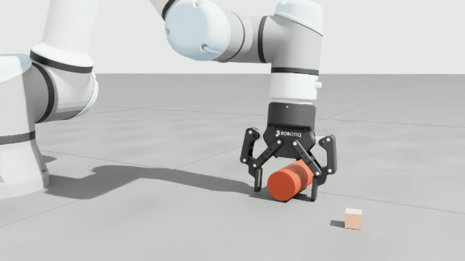
- Isaac Sim assets: Add closed-loop kinematics for more detailed simulation of the gripper’s movement and behavior.
The software releases are also the first components of Contact Core, Robotiq’s software layer for physical AI. Contact Core is designed to provide model developers with simulation assets, control software and synchronized contact data for training manipulation models using Robotiq components and deploying them on physical robots.
Robotiq said the next step will be embedded intelligence at the point of contact, which it expects to release in the fourth quarter.
The company plans to demonstrate the technology at the IEEE/RSJ International Conference on Intelligent Robots & Systems, or IROS 2026, in Pittsburgh on Sept. 28 at booth 427.
Image credit: Robotiq